World War I
1916-1918
World War I
British Mk. I
The Mark I was the first operational tank, designed to break trench warfare by crushing barbed wire, crossing trenches, and disrupting rear positions. About 50 were deployed at the Somme.


Mk. IV Gallery
British Mk. I Tank Development
Introduced in 1916 during the First World War, the British Mark I was the world’s first operational tank and marked the beginning of armored warfare. Developed in response to the deadly trench stalemate on the Western Front, the Mark I was designed to cross trenches, crush barbed wire, and protect infantry from machine-gun fire.
The Mark I first entered combat at the Battle of the Somme in September 1916. Although mechanically unreliable and extremely slow, its appearance shocked German forces and demonstrated the future potential of armored vehicles on the battlefield.
The tank featured a distinctive rhomboid shape that allowed it to climb obstacles and cross wide trenches. Two versions were produced: the “Male” variant armed with 6-pounder naval guns and machine guns, and the “Female” variant equipped solely with machine guns for anti-infantry defense.
Powered by a 105 hp Daimler engine, the Mark I had a top speed of only about 3–4 mph and required a large crew to operate. Conditions inside the tank were brutal, with extreme heat, engine fumes, and poor ventilation making combat operations difficult for crews.
A total of 150 Mark I tanks were built. Despite its many shortcomings, the Mark I revolutionized modern warfare and laid the foundation for all future tank development.


Mk. I Historical Photographs
French Schneider CA
Developed independently under Jean-Baptiste Eugène Estienne, the Schneider CA was based on a Holt Manufacturing Company chassis.
Although effective at cutting barbed wire, it suffered from poor mobility and vulnerability to armor-piercing rounds. Its shortcomings led to rapid improvements in French tank design, including the adoption of spaced armor.

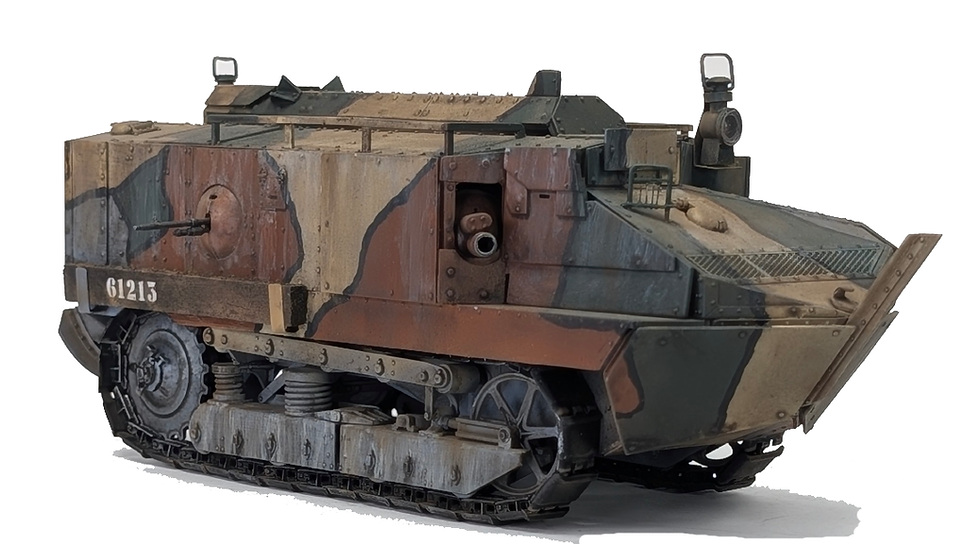

Schneider CA Gallery
French Schneider CA Development
The Schneider CA1 was France’s first operational tank and was developed in response to the brutal trench warfare conditions of the First World War. By 1915, French military leaders recognized the need for an armored vehicle capable of crossing barbed wire, supporting infantry attacks, and surviving machine-gun fire on the battlefield.
Development of the vehicle was led by the Schneider company in cooperation with French Army officer Colonel Jean Baptiste Eugène Estienne, one of the earliest advocates of armored warfare. The design was heavily influenced by the American Holt tractor, whose tracked suspension system provided the basis for the tank’s mobility system.
Unlike the British rhomboid tanks, the Schneider CA1 used a more conventional box-shaped hull with tracks mounted along the sides. The vehicle carried a short 75 mm gun mounted in the front right side of the hull along with machine guns for close defense. Armor protection was relatively thin, but sufficient against rifle fire and shell fragments.
The Schneider’s design suffered from several important limitations. Its short track length and large front overhang made trench crossing difficult, and external fuel tanks created a serious fire hazard in combat. Mechanical reliability was also poor, a common problem among early tanks of the era.
Despite these shortcomings, production began in 1916 and approximately 400 Schneider CA1 tanks were built. The vehicle first saw combat in 1917 during the Nivelle Offensive. Although battlefield performance was disappointing, the Schneider CA1 marked the beginning of French armored warfare development and provided valuable lessons that later influenced the highly successful Renault FT light tank.
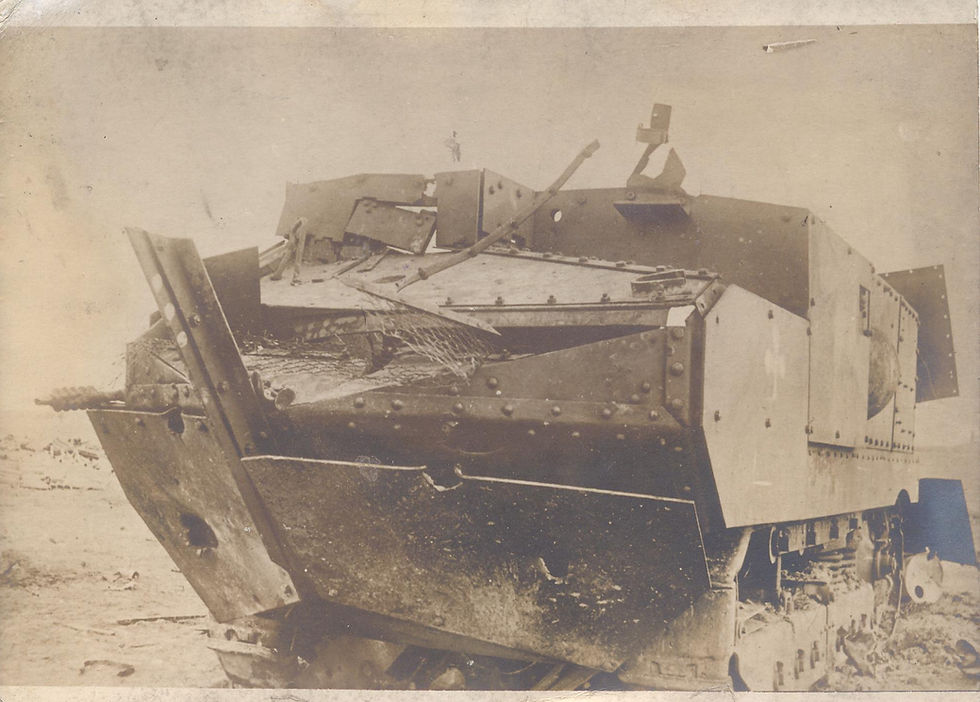
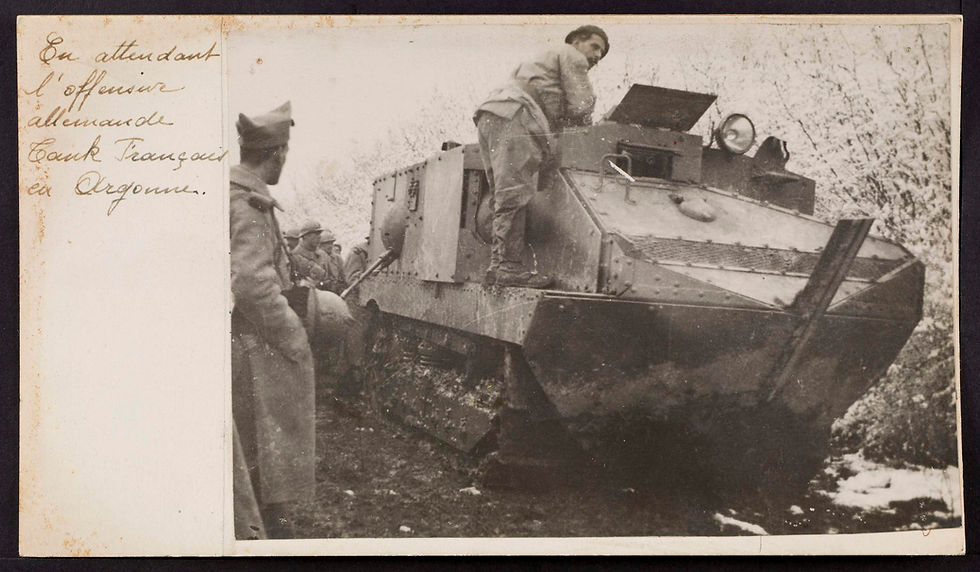

Schneider CA Historical Photographs
French St. Chamond
The St. Chamond featured a powerful 75 mm gun and advanced engine but was hampered by an overextended hull that reduced trench-crossing ability.
Produced by FAMH, it reflects how industrial rivalry influenced French tank development.


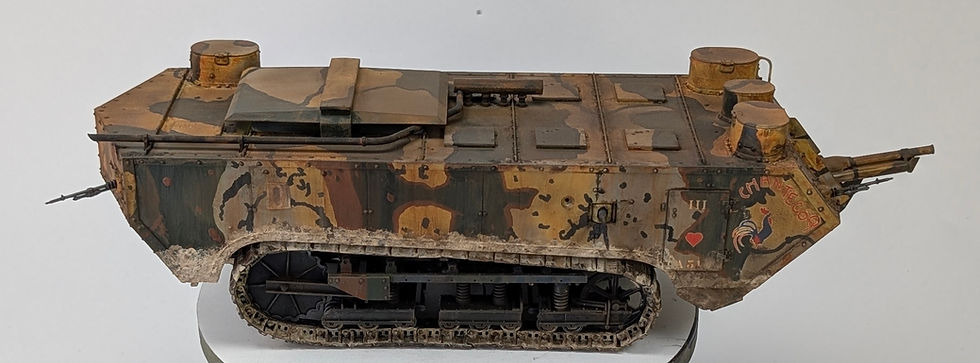
St Charmond Gallery
French St Charmond Development
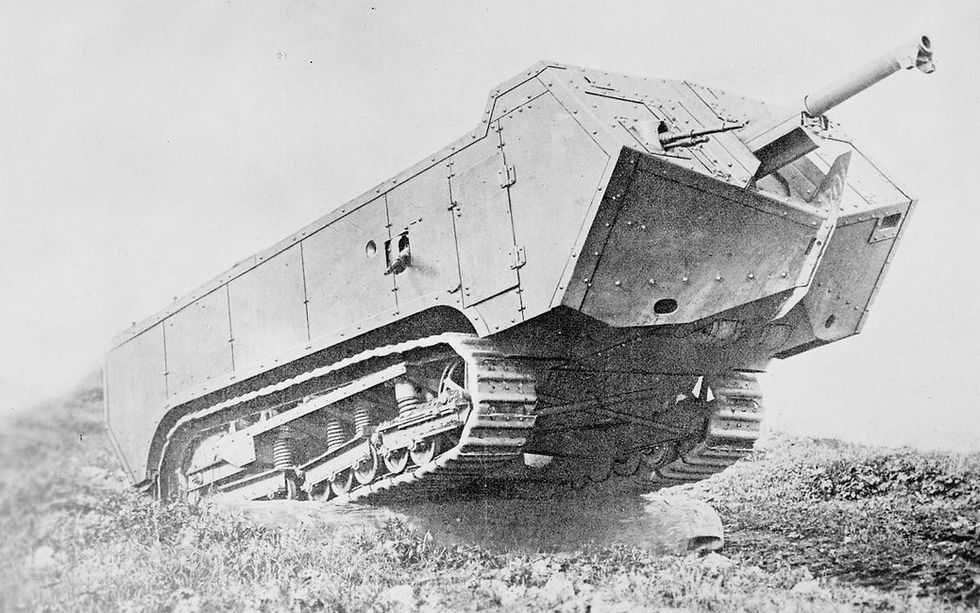
The Saint-Chamond tank was developed during the First World War as part of France’s effort to create armored vehicles capable of breaking the trench deadlock on the Western Front. Following the initial development of the Schneider CA1, a competing industrial group led by the Compagnie des Forges et Aciéries de la Marine et d'Homécourt sought to produce its own tank design for the French Army.
Like many early French armored vehicles, the Saint-Chamond was based on the Holt tractor suspension system. However, engineers attempted to create a more heavily armed and technologically advanced vehicle than the Schneider. The tank featured a large, elongated hull capable of mounting a full-size 75 mm field gun in the front of the vehicle, giving it considerably greater firepower than most contemporary tanks.
The Saint-Chamond introduced several innovative features for its time, including an electric transmission system that connected the gasoline engine to electric motors driving the tracks. While advanced in theory, the system proved mechanically complex and unreliable under battlefield conditions.
One of the tank’s greatest weaknesses was its long hull overhang extending far beyond the tracks. This design severely limited trench-crossing ability and often caused the vehicle to become stuck in rough terrain or shell craters. Combined with its heavy weight and relatively narrow tracks, cross-country mobility was poor compared to British tank designs.
Production began in 1917, and approximately 400 Saint-Chamond tanks were built. Although combat performance was mixed and operational reliability remained problematic, the vehicle represented an important stage in the evolution of French armored warfare. Lessons learned from both the Schneider and Saint-Chamond programs ultimately contributed to the development of more effective tank designs such as the Renault FT.


St Charmond Historical Photographs
British Mk. IV Male
The British Mark IV tank was the production variant


Mk IV Gallery
British Mk. IV Development
The British Mark IV tank was developed as an improved version of the earlier Mark I, II, and III tanks after combat experience revealed significant mechanical and battlefield shortcomings in the original designs. Introduced in 1917 during the First World War, the Mark IV was intended to provide better protection, greater reliability, and improved battlefield effectiveness on the Western Front.
One of the most important changes involved fuel storage. Earlier British tanks carried fuel tanks inside the fighting compartment, creating an extreme fire hazard when struck by enemy fire. On the Mark IV, the fuel tank was relocated outside the crew compartment, greatly improving crew survivability and reducing the risk of catastrophic fires.
Armor protection was also increased, with thicker plating designed to better resist machine-gun fire, armor-piercing bullets, and shell fragments. Although this added weight and reduced speed slightly, the improved protection made the Mark IV a far more effective battlefield vehicle than its predecessors.
The tank retained the characteristic rhomboid shape developed for earlier British heavy tanks. This design allowed the vehicle to cross wide trenches and navigate difficult terrain common on the Western Front. Armament continued to be mounted in side sponsons, with “Male” versions carrying 6-pounder naval guns and machine guns, while “Female” versions carried only machine guns for anti-infantry support.
Mechanical improvements increased reliability compared to earlier marks, though the vehicle still suffered from overheating, difficult steering, and harsh operating conditions for the crew. Despite these limitations, the Mark IV became the most successful British tank of the war and demonstrated the growing importance of armored warfare.
Approximately 1,220 Mark IV tanks were produced. The type gained fame during the Battle of Cambrai in 1917, where large-scale tank attacks showed the potential of coordinated armored offensives and influenced future tank development around the world.

Mk. IV Historical Photographs
German A7V
The A7V was Germany’s only operational tank design of the war, with just 20 produced.
It mounted a 57 mm gun and multiple machine guns but suffered from mechanical complexity and limited production.
The first tank-on-tank battle occurred at the Second Battle of Villers-Bretonneux.


A7V Gallery
German A7V Development
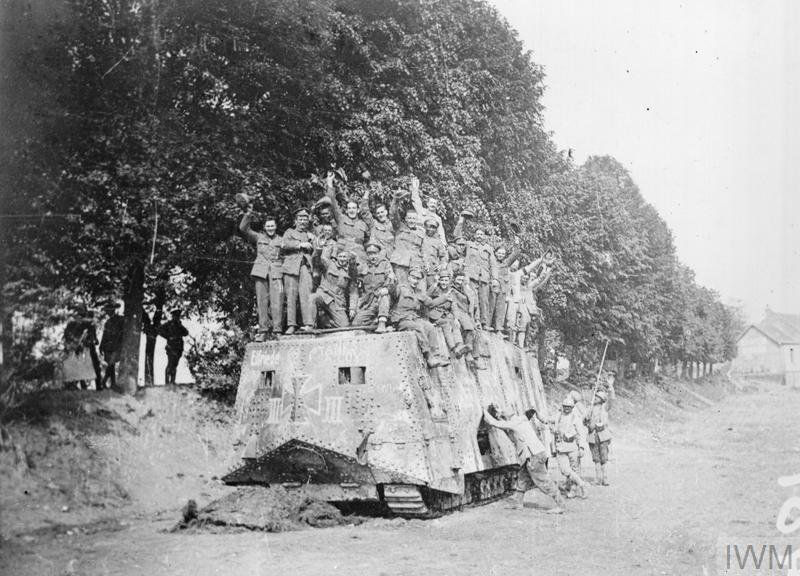
The A7V was Germany's first and only operational tank developed during the First World War. As British tanks began appearing on the battlefield in 1916, German military leaders recognized the need for an armored vehicle capable of supporting infantry attacks and countering Allied armored advances. Development was assigned to the Allgemeines Kriegsdepartement, from which the designation "A7V" was derived.
The design utilized a modified Holt-type tractor chassis combined with a large armored hull capable of carrying substantial firepower. Unlike the British rhomboid tanks, the A7V featured a tall, box-shaped structure with a centrally mounted 57 mm gun and multiple machine guns positioned around the hull. This arrangement provided excellent firepower but resulted in a high silhouette that made the vehicle an easy target on the battlefield.
The tank's heavy weight and high center of gravity created significant mobility problems. The short track system struggled to cross trenches and shell craters, while rough terrain often caused the vehicle to become unstable. Mechanical reliability was also poor, reflecting the challenges faced by all early tank designs.
Production began in 1917, but Germany's strained wartime industry limited output to only 20 vehicles. Despite its limited numbers, the A7V achieved historical significance by participating in the world's first tank-versus-tank battle at Villers-Bretonneux in April 1918. Although the design had numerous shortcomings, it provided Germany with valuable experience in armored warfare and remains one of the most recognizable tanks of the First World War.


A7V Historical Photographs
British Whippet Mk. A
The Medium Mark A Whippet was designed to complement heavy tanks like the Mark IV.
Instead of breaking trenches, the Whippet was built for speed and exploitation—rushing through breakthroughs to attack artillery, supply lines, and command centers.


Whippet Mk.A Gallery
British Whippet Mk. A Development
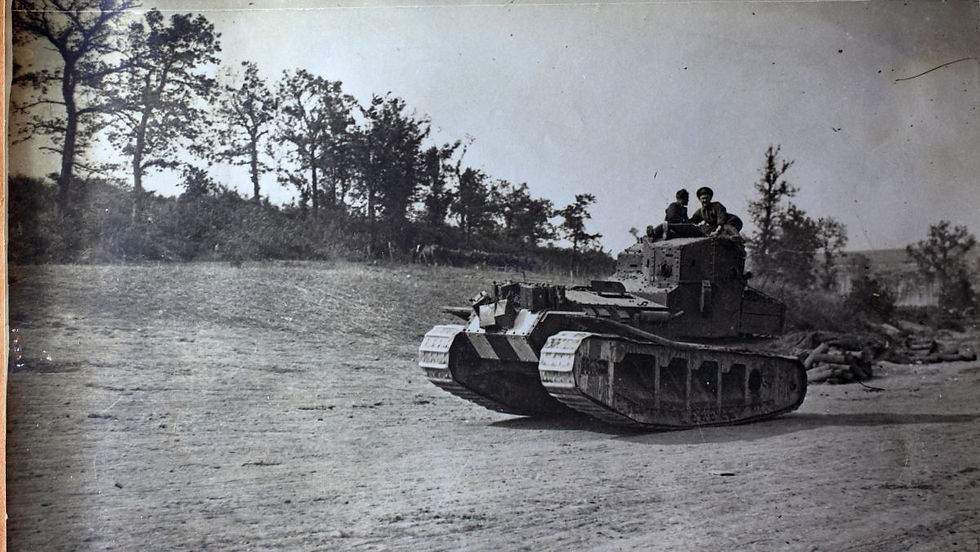
The Medium Mark A Whippet was developed by Britain in response to the limitations of its heavy tanks during the First World War. While the Mark I through Mark V heavy tanks were effective at crossing trenches and breaking through enemy defenses, they were too slow to exploit breakthroughs. British planners sought a faster armored vehicle capable of advancing beyond the front line and disrupting enemy rear areas.
Development began in 1916 under the direction of Sir William Tritton. Rather than using the large rhomboid configuration of existing British tanks, the Whippet employed a more compact hull and was powered by two commercial truck engines. This design allowed significantly higher speeds than contemporary heavy tanks, earning the vehicle a reputation as one of the fastest armored fighting vehicles of the war.
The Whippet was armed with multiple machine guns mounted in a rotating superstructure, providing all-around defensive fire against infantry. Unlike British heavy tanks, it was not intended to assault heavily fortified positions but instead to exploit gaps created by heavier armored formations and advancing infantry.
The vehicle first entered service in 1918 and quickly demonstrated its value during Allied offensives. Its speed enabled deep penetrations into enemy territory, where it could attack supply lines, artillery positions, and retreating troops. Approximately 200 Whippets were produced before the end of the war.
Although developed late in the conflict, the Whippet introduced the concept of a fast exploitation tank and influenced later cruiser tank doctrine. Its emphasis on mobility represented an important step in the evolution of armored warfare.


Whippet Historical Photographs
French FT-17
The Renault FT revolutionized tank design with its fully rotating turret, rear engine, and front driver layout.
• Production: 3,000+ units
• Designers: Louis Renault, Rodolphe Ernst-Metzmaier
• Legacy: Foundation of modern tank design
It was widely used by French and American forces under John J. Pershing and George S. Patton.


FT-17 Gallery
Renault FT Development
The Renault FT was developed by France during the First World War to provide a lighter, more mobile alternative to the larger Schneider CA1 and Saint-Chamond tanks. French Army officer Colonel Jean Baptiste Eugène Estienne advocated for a small tank that could be mass-produced and operate in close support of infantry units across the battlefield.
Development began in 1916 under the leadership of the Renault automobile company and its founder, Louis Renault. Engineers designed a compact vehicle that emphasized simplicity, mobility, and ease of production. Unlike previous tank designs, the Renault FT featured a fully rotating turret mounted on top of the hull, with the driver positioned in the front and the engine located in the rear.
This arrangement became known as the "classic" tank layout and remains the standard configuration for tanks today. The design provided excellent crew efficiency, improved visibility, and better weight distribution compared to contemporary armored vehicles.
The Renault FT was armed with either a 37 mm cannon or a machine gun depending on the variant. Its relatively light weight allowed it to cross difficult terrain more effectively than larger tanks, while its small size made it a harder target for enemy artillery.
Production began in 1917, and more than 3,700 vehicles were built before the end of the war. The Renault FT proved highly successful in combat and was widely exported after the conflict. Its revolutionary design influenced tank development around the world and established many of the fundamental principles of modern armored vehicle construction.


