World War II
1940
World War I
German Panzerjäger 35R(f)
The Panzerjäger 35R(f) was a German self-propelled tank destroyer created by converting captured French Renault R35 light tanks into mobile anti-tank vehicles. Armed with the Czech-built 4.7 cm PaK(t) anti-tank gun mounted in an open-topped superstructure, it provided German occupation and security forces with an economical means of increasing their anti-tank capability. The vehicle served primarily in France and the Channel Islands, where it reinforced German defensive formations.


Following the conquest of France in 1940, Germany captured hundreds of Renault R35 tanks that were obsolete for frontline armored combat. To maximize their usefulness, engineers removed the original turret and installed the proven 4.7 cm PaK(t) anti-tank gun within a lightly armored fighting compartment. Although the vehicle offered only modest protection and limited mobility, the conversion effectively extended the service life of the R35 chassis. The Panzerjäger 35R(f) reflected Germany's extensive use of captured equipment to supplement armored forces during the middle years of the war.


Historcial and Walkaround Photos
German Panzer 35R(f)
The Panzerkampfwagen 35R(f) was the German designation for captured French Renault R35 light tanks following the fall of France in 1940. While considered obsolete by German standards due to their slow speed and one-man turret, these vehicles provided the Wehrmacht with a valuable source of armored equipment during a period of rapid expansion. Many served in occupation duties, training units, and second-line security formations throughout occupied Europe.


After capturing hundreds of Renault R35 tanks during the French campaign, Germany incorporated many into its inventory under the designation Panzer 35R(f). Although few remained in frontline armored formations because of their limited mobility and firepower, the sturdy chassis proved useful for numerous conversions. Many were rebuilt as artillery tractors, ammunition carriers, command vehicles, or self-propelled anti-tank guns armed with Czech or German weapons. These conversions allowed the Germans to maximize the value of captured equipment while reserving newer tanks for frontline operations.
Historcial and Walkaround Photos
Hungarian Toldi I 38M
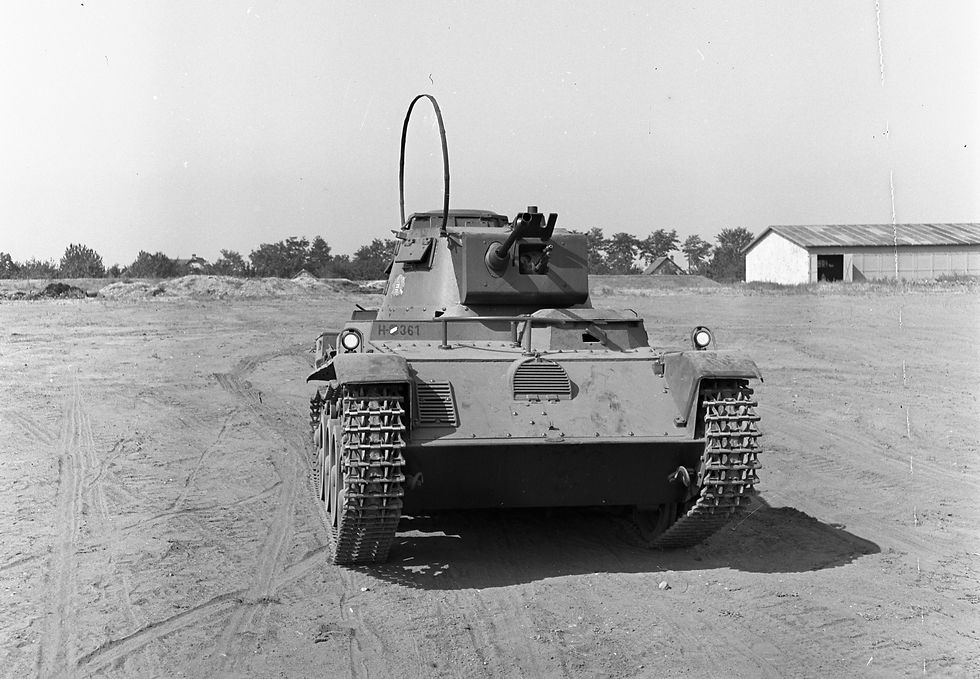
The Toldi I was Hungary's first modern domestically produced light tank of the Second World War. Based on the Swedish Landsverk L-60 design, it combined excellent mobility with modern suspension and dependable mechanical performance. Entering service in 1940, the Toldi I equipped Hungary's armored units during the invasions of Yugoslavia and the Soviet Union. Although highly maneuverable, its light armor and 20 mm main armament limited its effectiveness against increasingly capable enemy tanks.


Seeking to modernize its armored forces, Hungary purchased a production license for the Swedish Landsverk L-60 in 1938. Hungarian engineers modified the original design with locally produced equipment, revised communications systems, and changes to the turret and hull before entering production as the 38M Toldi I. While the design proved reliable and well suited for reconnaissance duties, combat on the Eastern Front exposed its inadequate firepower and protection. Later versions received thicker armor and a more powerful 40 mm gun, but the Toldi gradually shifted from frontline combat to reconnaissance and support roles.


Historcial and Walkaround Photos
Italian M13/40 Carro Armato
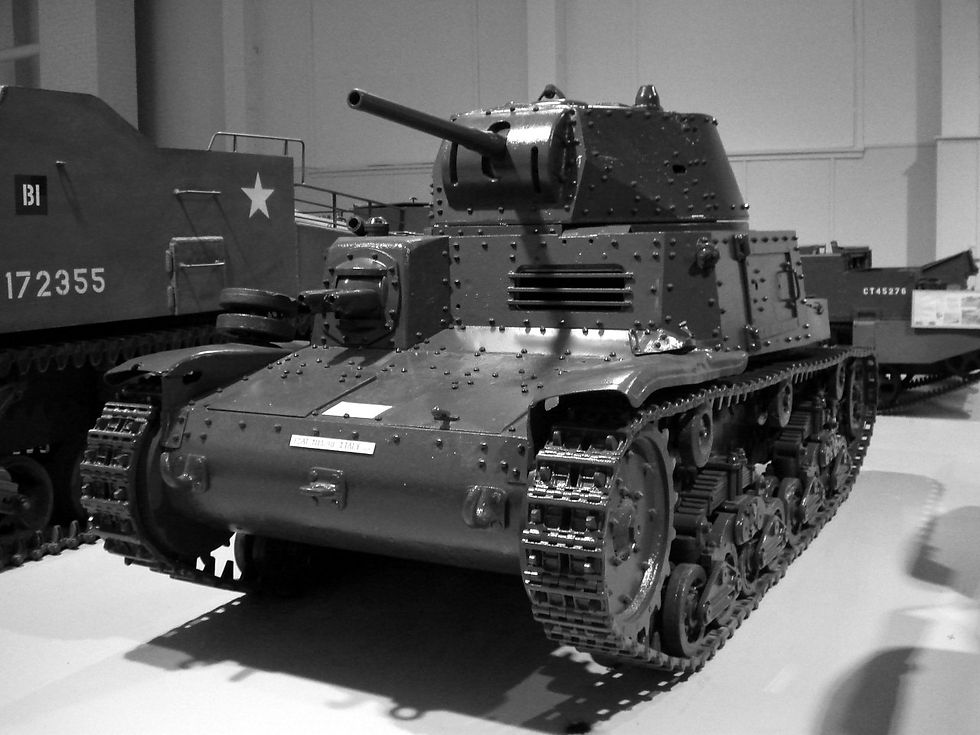
The M13/40 was Italy's principal medium tank during the early years of the Second World War. Entering service in 1940, it combined a 47 mm main gun with diesel power and heavier armor than its predecessors, making it a considerable improvement over earlier Italian armored vehicles. The M13/40 served extensively in North Africa, the Balkans, and the Eastern Front, where it formed the backbone of Italian armored divisions. Although adequate when introduced, the tank was quickly surpassed by more heavily armed and armored Allied vehicles.


The M13/40 evolved directly from the earlier M11/39, correcting several design shortcomings. Engineers relocated the 47 mm gun from the hull into a fully rotating turret, greatly improving combat effectiveness and tactical flexibility. Increased armor protection and a reliable diesel engine enhanced battlefield performance, but limited industrial capacity and continued reliance on riveted armor restricted further improvements. As Allied tank designs advanced, the M13/40 was gradually replaced by the improved M14/41 and later Italian medium tanks.


Historcial and Walkaround Photos
Soviet KV-2
The KV-2 was a Soviet heavy assault tank developed to destroy heavily fortified defensive positions. Built on the chassis of the KV-1 heavy tank, it carried an enormous turret mounting a 152 mm howitzer capable of demolishing bunkers and concrete fortifications. Although its massive firepower was impressive, the KV-2's large size, slow turret traverse, and mechanical complexity limited its effectiveness during the German invasion of the Soviet Union in 1941.


The KV-2 was developed following Soviet combat experience during the Winter War against Finland, where conventional tanks struggled against fortified defensive lines. Engineers mounted a large 152 mm artillery piece in a box-shaped turret on the proven KV chassis to provide direct-fire support against hardened targets. While the vehicle successfully fulfilled its intended role, its excessive weight and high profile reduced mobility and increased mechanical failures. Production ended in 1941 as Soviet industry shifted toward simpler and more versatile armored vehicles.


Historcial and Walkaround Photos
Soviet T-34/76
The T-34/76 was the Soviet Union's most influential medium tank during the early years of the Second World War. Combining sloped armor, wide tracks, excellent mobility, and a powerful 76.2 mm gun, it outclassed many contemporary German tanks when introduced in 1940. The T-34 became the backbone of Soviet armored forces and played a decisive role in reversing the tide of the war on the Eastern Front through its balance of protection, firepower, and ease of production.


Development of the T-34 evolved from earlier Soviet fast tank designs, particularly the BT series. Engineers combined Christie suspension, a powerful diesel engine, and heavily sloped armor into an innovative design that emphasized survivability without excessive weight. Early combat exposed weaknesses in crew ergonomics, visibility, and communications, but continuous improvements throughout production steadily increased reliability. The success of the T-34 established many design principles that influenced tank development worldwide for decades.


Historcial and Walkaround Photos
British Universal Carrier Mk. II
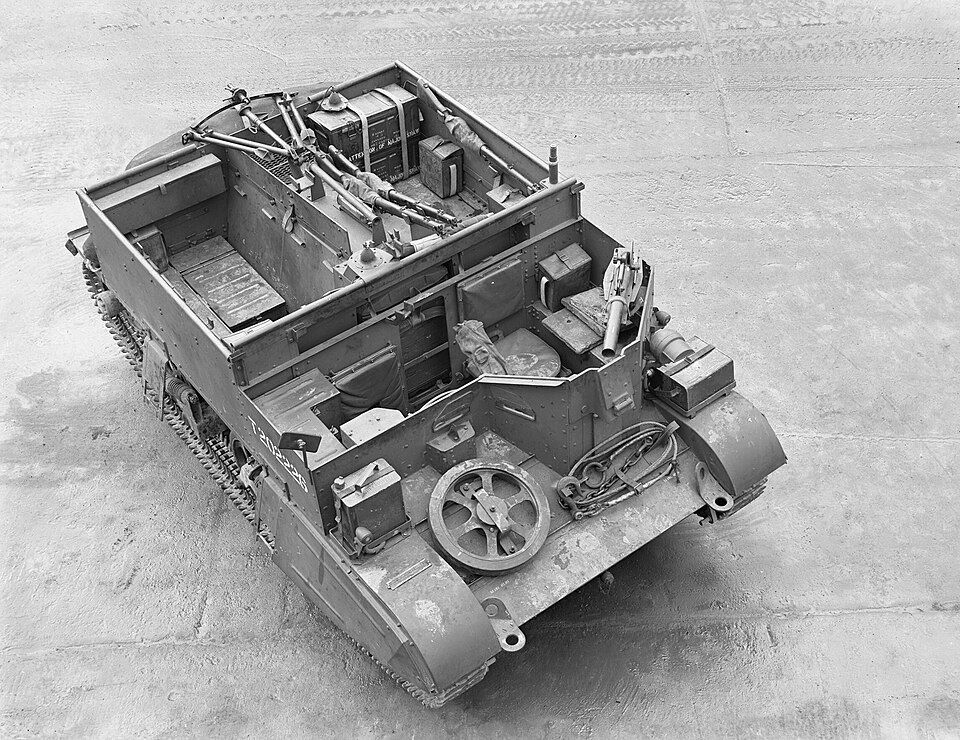
The Universal Carrier Mk. II was one of the most widely produced armored vehicles of the Second World War. Designed as a compact tracked utility vehicle, it transported infantry, reconnaissance teams, heavy weapons, ammunition, and supplies across a wide variety of terrain. Its simple construction, mechanical reliability, and exceptional versatility allowed it to serve with British, Commonwealth, and Allied forces in every major theater of the war, making it one of the most recognizable support vehicles of the conflict. (Wikipedia)

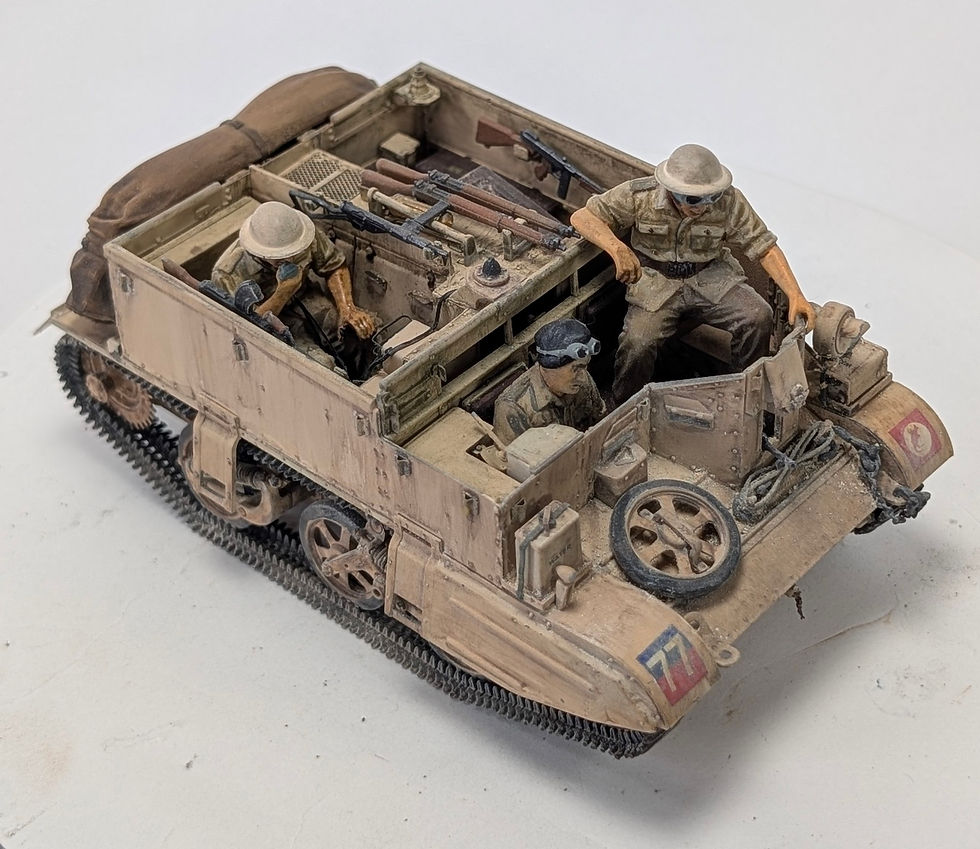

The Universal Carrier resulted from combining several earlier specialized carrier designs into a single standardized vehicle capable of performing numerous battlefield roles. The Mk. II incorporated refinements that simplified production and improved reliability while maintaining the proven Ford V8 powertrain and fully tracked suspension. Beyond troop transport, the vehicle served as a command post, machine gun carrier, mortar carrier, anti-tank platform, artillery tractor, ambulance, and reconnaissance vehicle. More than 100,000 Universal Carriers of all variants were produced, making it the most numerous armored fighting vehicle built by the British Commonwealth during the war.


Historcial and Walkaround Photos
German Panzerjäger I
The Panzerjäger I was Germany's first purpose-built self-propelled anti-tank vehicle. It combined the obsolete Panzer I chassis with the highly effective Czech 4.7 cm PaK(t) anti-tank gun, providing German forces with a mobile weapon capable of engaging enemy armor at longer ranges than many contemporary tanks. The Panzerjäger I served successfully in France, North Africa, and during the opening stages of Operation Barbarossa before being replaced by more capable designs.


As increasingly well-armored Allied tanks entered service, Germany sought an expedient method of improving its anti-tank capability. Engineers removed the Panzer I turret and installed a Czech-built 47 mm anti-tank gun within an open-topped armored fighting compartment. Although lightly armored and vulnerable to artillery and small arms from above, the Panzerjäger I demonstrated the effectiveness of combining powerful anti-tank guns with tracked chassis. Its success led directly to later German tank destroyers such as the Marder series.


Historcial and Walkaround Photos
German Bison (s.IG.33)
The Bison was Germany's first self-propelled heavy infantry gun, combining the powerful 15 cm sIG 33 infantry gun with the chassis of the Panzer I light tank. Designed to provide highly mobile heavy fire support, it allowed infantry units to accompany armored formations while delivering devastating high-explosive fire against fortified positions. Although effective in firepower, the vehicle's high center of gravity, cramped fighting compartment, and overloaded chassis limited its battlefield performance.


German experience in the early stages of the war demonstrated the need for heavy artillery capable of keeping pace with advancing armored units. Rather than design a completely new vehicle, engineers mounted the existing sIG 33 infantry gun onto surplus Panzer I chassis. While the conversion was completed quickly, the resulting vehicle suffered from poor stability, excessive weight, and limited ammunition capacity. Despite these shortcomings, the Bison provided valuable operational experience that influenced the development of more capable self-propelled artillery vehicles later in the war.


Historcial and Walkaround Photos
German Tauchpanzer IV E
The Tauchpanzer IV Ausf. E was a specially modified version of the Panzer IV designed for underwater river crossings during Germany's planned invasion of Great Britain. The vehicle was waterproofed to operate beneath shallow water while receiving air through a long flexible snorkel extending above the surface. Although the invasion never occurred, Tauchpanzer IVs were later employed during Operation Barbarossa to cross rivers and surprise Soviet defenders.
Development


Development of the Tauchpanzer program began in 1940 as part of Operation Sea Lion preparations. Standard Panzer IV Ausf. E tanks were fitted with waterproof seals, protected engine openings, sealed turret rings, and a removable snorkel system that supplied air to both the engine and crew while submerged. Following the cancellation of the invasion of Britain, these vehicles remained in service and were successfully used during several river-crossing operations on the Eastern Front. The concept demonstrated German ingenuity in overcoming natural obstacles but became increasingly unnecessary as specialized bridging equipment became more widely available.
If this matches what you're looking for, we can continue with the next set in the same style until all ~120 vehicles have Overview and Development sections completed.


Historcial and Walkaround Photos
German Panzer 38(t) E/F
The Panzer 38(t) Ausf. E and F represented the most heavily armored production versions of Germany's highly successful Czech-designed light tank. Originally developed as the LT vz. 38 by ČKD in Czechoslovakia, the vehicle entered German service following the occupation of Czechoslovakia in 1939. The Ausf. E/F variants featured substantially thicker frontal armor, improving crew protection while retaining the excellent reliability and mobility that made the Panzer 38(t) one of Germany's most dependable early-war tanks. These vehicles participated extensively in Operation Barbarossa during 1941, where they proved mechanically reliable but increasingly outmatched by newer Soviet tanks such as the T-34 and KV-1.
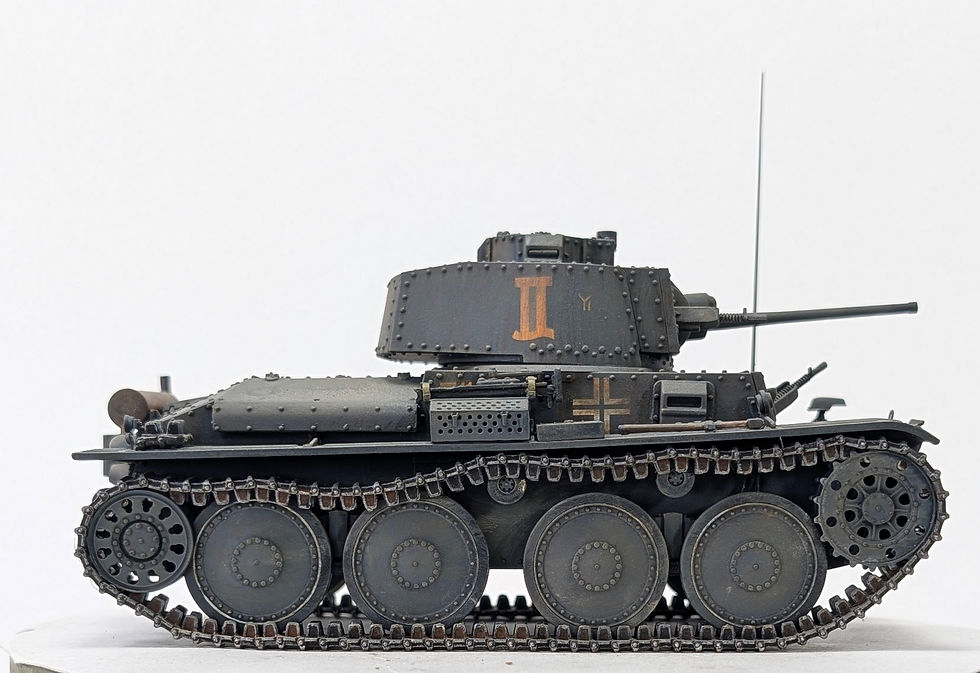
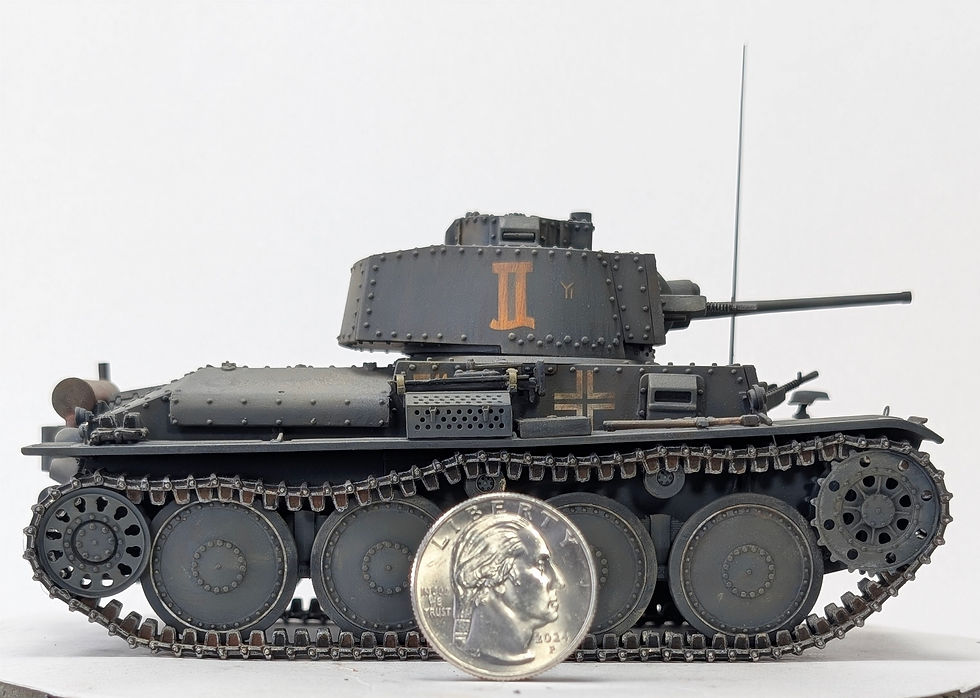

Combat experience during the campaigns in Poland and France demonstrated the need for greater armor protection. Beginning with the Ausf. E, the frontal hull armor was increased to 50 mm through the addition of bolted armor plates, while side armor was also strengthened. Although these improvements enhanced survivability, the 37 mm main gun remained unchanged and soon became inadequate against heavily armored opponents on the Eastern Front. Production of the Panzer 38(t) as a battle tank ended in 1942, but its exceptionally reliable chassis continued to serve as the basis for numerous German armored vehicles, including the Marder III tank destroyer and the Jagdpanzer 38 "Hetzer." (Wikipedia)


Historcial and Walkaround Photos
German StuG III B
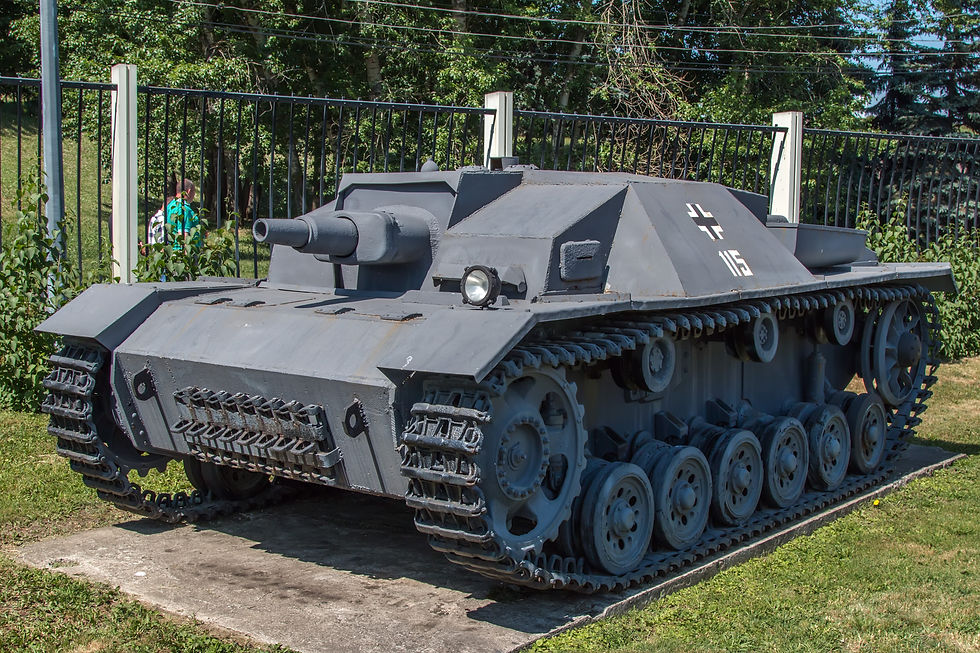
The StuG III Ausf. B was one of the earliest production versions of Germany's highly successful Sturmgeschütz III assault gun. Built on the reliable Panzer III chassis, it was designed to provide mobile, armored artillery support for infantry units rather than engage enemy tanks. Armed with the short-barreled 7.5 cm StuK 37 L/24 gun, the StuG III B proved highly effective against bunkers, machine-gun positions, and field fortifications during the campaigns in the Balkans and the opening stages of Operation Barbarossa. Its low silhouette and dependable mechanical design also made it difficult to detect and an effective defensive weapon.


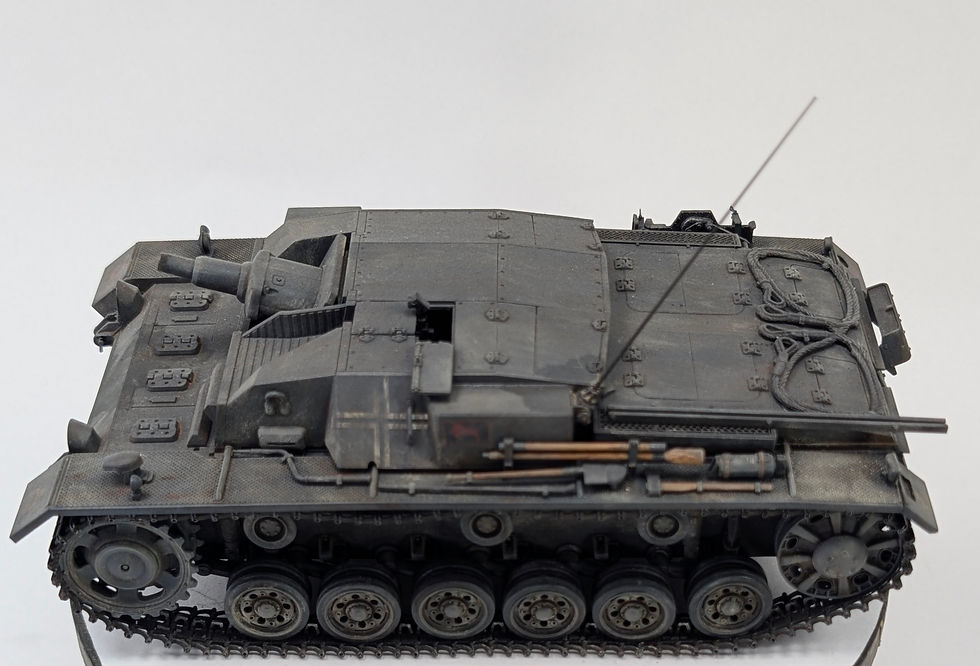
The StuG III originated from pre-war German doctrine calling for a fully tracked, armored vehicle capable of delivering direct artillery fire in support of advancing infantry. The Ausf. B introduced improvements to the transmission, suspension, and track design over the initial production model, increasing reliability and mobility. Although originally intended solely as an assault gun, combat experience on the Eastern Front demonstrated the need for greater anti-tank capability. This eventually led to later StuG III variants receiving longer, high-velocity guns that transformed the vehicle into one of Germany's most successful tank destroyers.