World War I
Soviet KV-1
The KV-1 was a Soviet heavy tank introduced in 1940 and named after defense commissar Kliment Voroshilov. Possessing armor far thicker than most contemporary tanks, it shocked German forces during Operation Barbarossa, where many anti-tank guns proved ineffective against it. Armed with a 76.2 mm gun and protected by armor up to 90 mm thick, the KV-1 became one of the most formidable armored vehicles of the early war. Despite mechanical difficulties and limited mobility, its protection and firepower gave the Red Army a powerful breakthrough tank.
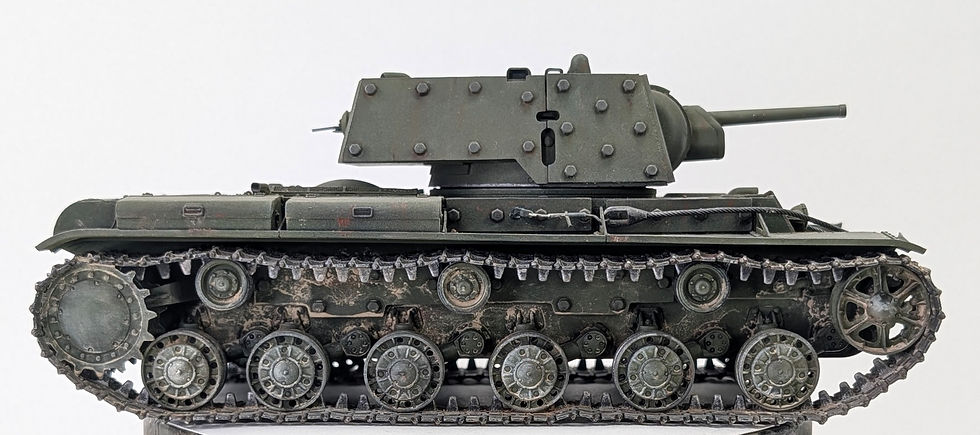


The KV-1 emerged from Soviet efforts to replace the cumbersome multi-turreted T-35 with a more practical heavy tank. Designed by the Kirov Plant under the direction of Joseph Kotin, prototypes underwent combat testing during the Winter War against Finland, where heavy armor proved essential against fortified positions. Production began in 1940, and the tank entered service shortly before the German invasion. Continuous improvements increased armor and armament, but additional weight strained the transmission and suspension. Although eventually surpassed by newer Soviet designs, the KV-1 played a critical role in delaying German advances during the first years of the Eastern Front.


Historcial and Walkaround Photos
German Tauchpanzer III E


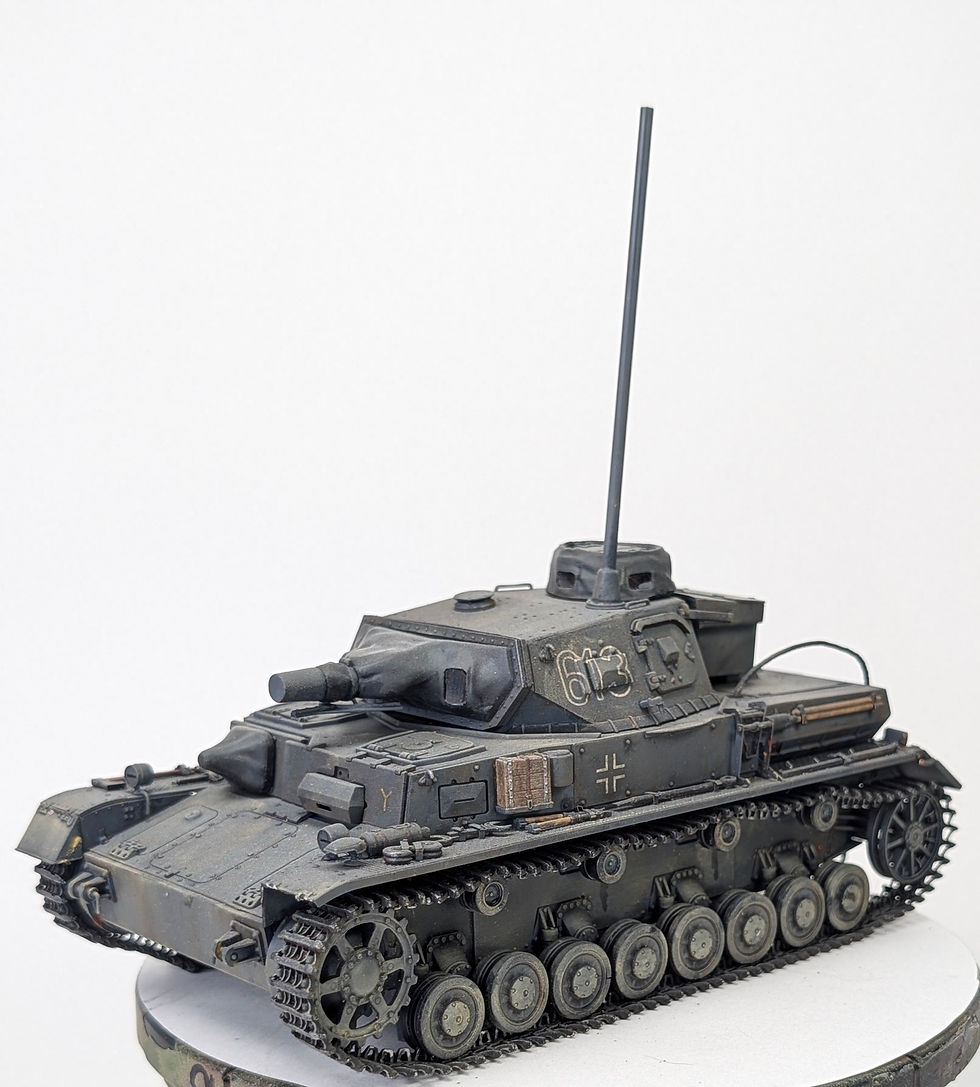
Historcial and Walkaround Photos
French Hotchkiss H39
The Hotchkiss H39 was an improved version of the French H35 light tank and served as one of France's principal armored vehicles during the 1940 campaign. It featured thicker armor, a more powerful engine, and later models carried the effective 37 mm SA38 gun. Compact and well protected for its size, the H39 fought during the Battle of France and later saw service with German, Hungarian, Bulgarian, and other Axis forces after captured examples were pressed into use.

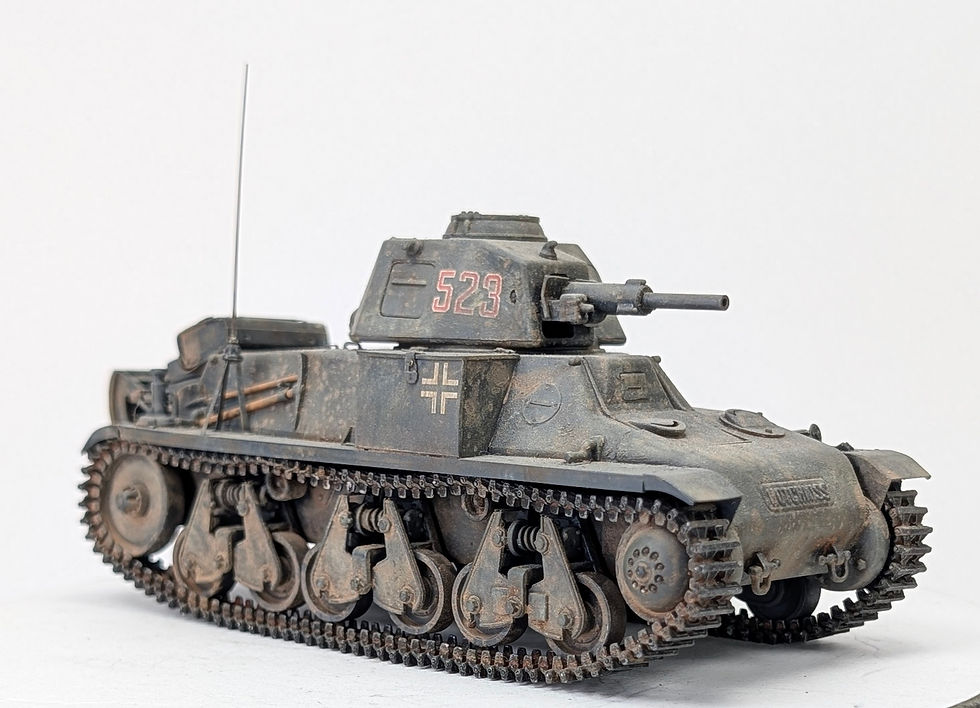

French military planners sought to improve the mobility and firepower shortcomings of the earlier Hotchkiss H35. Introduced in 1939, the H39 received a larger 120 hp engine that increased speed and range. Subsequent vehicles were equipped with the longer SA38 gun, providing significantly improved anti-tank performance. Although the vehicle retained the one-man turret common to many French tanks, limiting crew efficiency, its robust construction and reliability allowed numerous captured examples to remain in service long after France's defeat.


Historcial and Walkaround Photos
British A12 Matilda II
The A12 Matilda II was one of Britain's most heavily armored tanks at the beginning of World War II. Introduced in 1939, it proved exceptionally resistant to most German anti-tank weapons during the Battle of France and early campaigns in North Africa. Armed with the reliable 2-pounder gun and protected by armor up to 78 mm thick, the Matilda II earned a reputation for durability and battlefield survivability. Its strong armor made it a symbol of British infantry tank doctrine, emphasizing protection and deliberate advances alongside infantry forces.
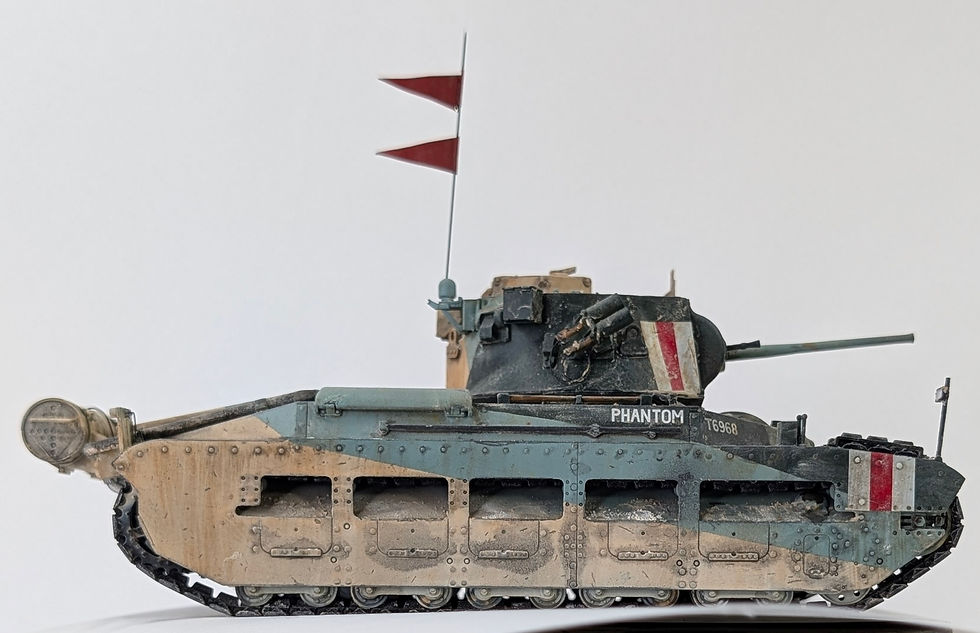


Designed as a successor to the lightly armed Matilda I, the A12 Matilda II retained the infantry tank concept while providing substantially improved armor and firepower. Vickers-Armstrong and Vulcan Foundry developed the vehicle around a pair of diesel engines to move its heavy weight. Production began in 1938, and operational experience quickly demonstrated the effectiveness of its armor. However, the limited anti-tank capability of the 2-pounder gun and the vehicle's relatively slow speed led to its gradual replacement by more versatile tanks, though it remained in service throughout much of the war.


