Interwar
1937
World War I
French Armored Carrier UE
The Armored Carrier UE, commonly known as the Renault UE, was a small tracked utility vehicle developed by France during the interwar period. Introduced in the early 1930s, it was designed primarily as an armored supply carrier rather than a combat vehicle. The UE was used to transport ammunition, equipment, and supplies to frontline units while providing limited protection for its crew. Compact, reliable, and inexpensive, the vehicle became one of the most numerous armored vehicles in French service. Following the fall of France in 1940, many captured examples were pressed into German service and adapted for a variety of military roles.


French military planners recognized the need for a tracked logistics vehicle capable of supporting infantry and armored formations over difficult terrain. Renault's design was selected after competitive trials and entered production in 1932. The vehicle featured a simple armored hull, a two-man crew, and an armored trailer for carrying additional supplies. Although originally intended as a logistical support vehicle, the Renault UE's versatility led to numerous experimental conversions, including machine-gun carriers and anti-tank gun transports. More than 5,000 vehicles were produced, making it one of the most successful French armored support vehicles of the era.

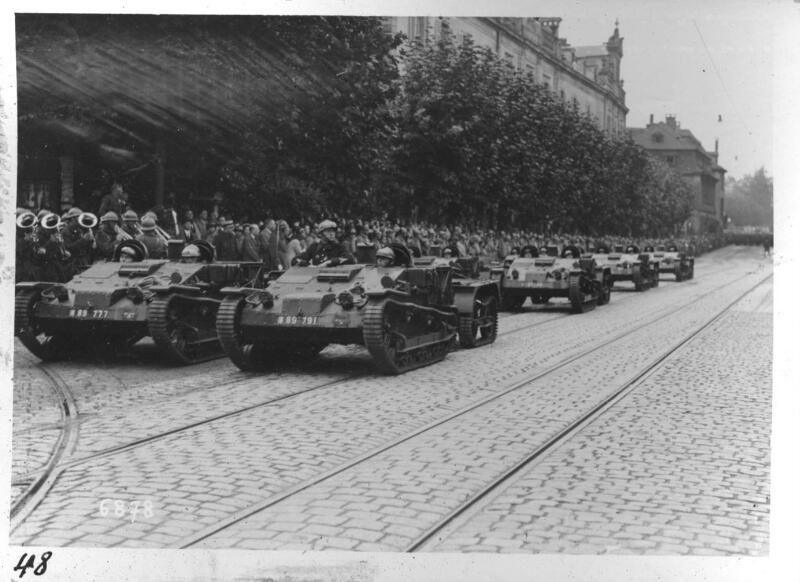

Historcial and Walkaround Photos
German Panzer III B
The Panzer III Ausf. B was an early production version of Germany's primary medium tank design of the late 1930s. Intended to serve as the main battle tank of the Panzer divisions, the vehicle was armed with a 37mm cannon and operated by a five-man crew, a feature that greatly improved battlefield effectiveness. Although produced in limited numbers, the Ausf. B represented an important step in the development of the Panzer III family. Lessons learned from its service contributed directly to the refinement of later variants that would become major participants in the early years of World War II.
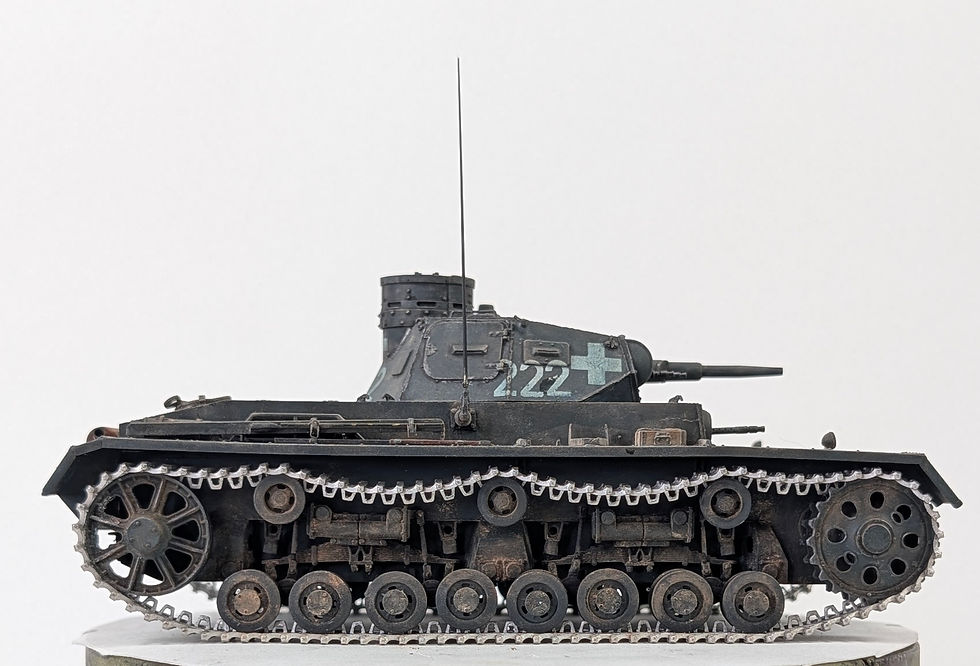
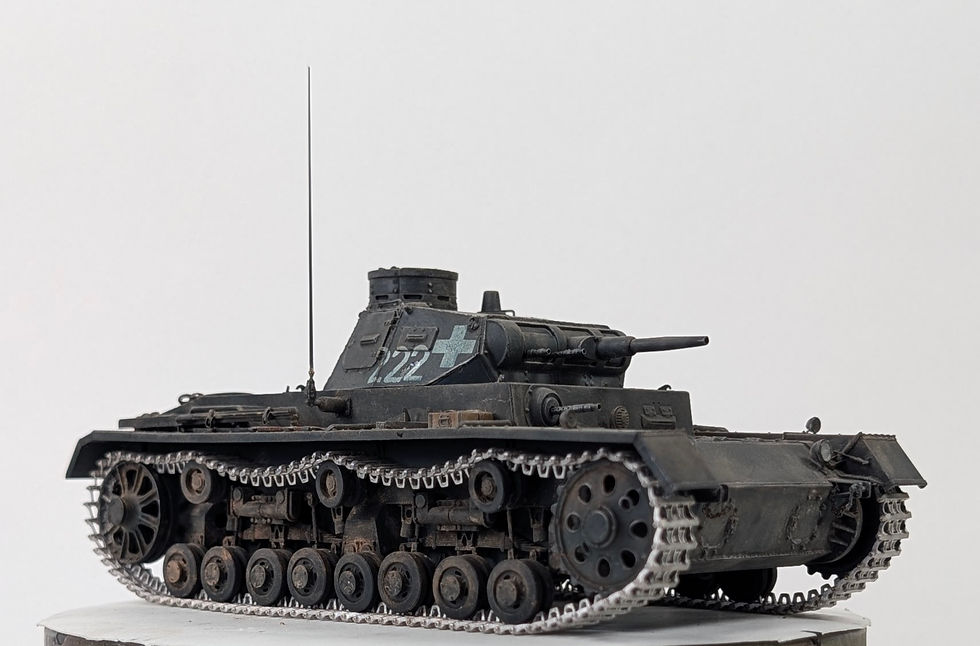

Development of the Panzer III began in response to German requirements for a tank capable of engaging enemy armored vehicles. The Ausf. B, introduced in 1937, featured significant experimentation with suspension systems, including eight road wheels mounted on leaf springs. While the design showed promise, operational testing revealed mechanical shortcomings that led engineers to continue refining the vehicle. Subsequent versions adopted improved suspension arrangements and stronger components. Although only a small number of Ausf. B tanks were built, they provided valuable experience that helped transform the Panzer III into one of Germany's most important pre-war and early-war tank designs.
Historcial and Walkaround Photos
French Char B1 Bis
The Char B1 bis was one of the most heavily armed and armored tanks in service at the outbreak of World War II. Developed by France as a breakthrough tank, it combined a hull-mounted 75mm gun with a turret-mounted 47mm cannon, giving it formidable firepower against both fortifications and armored targets. Thick armor protection made the Char B1 bis exceptionally resistant to most contemporary anti-tank weapons. During the Battle of France in 1940, individual Char B1 bis tanks often demonstrated remarkable combat effectiveness, although strategic and operational factors ultimately limited their impact on the campaign.


The Char B1 program originated during the 1920s as France sought a heavily armored vehicle capable of breaking through fortified defenses. Years of development resulted in the B1 bis, an improved model featuring thicker armor, a more powerful engine, and enhanced armament. Entering production in 1937, the vehicle represented one of the most advanced tank designs of its era. However, its complexity increased maintenance demands and production costs. Despite these challenges, the Char B1 bis demonstrated that heavy armor and powerful armament could provide a significant battlefield advantage, influencing future heavy tank development throughout World War II.

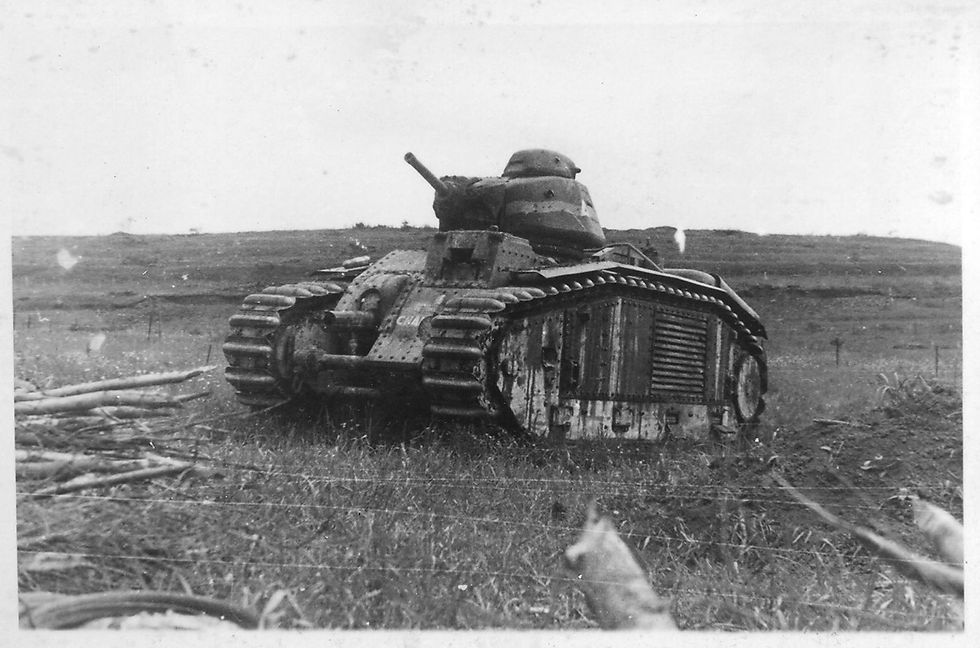
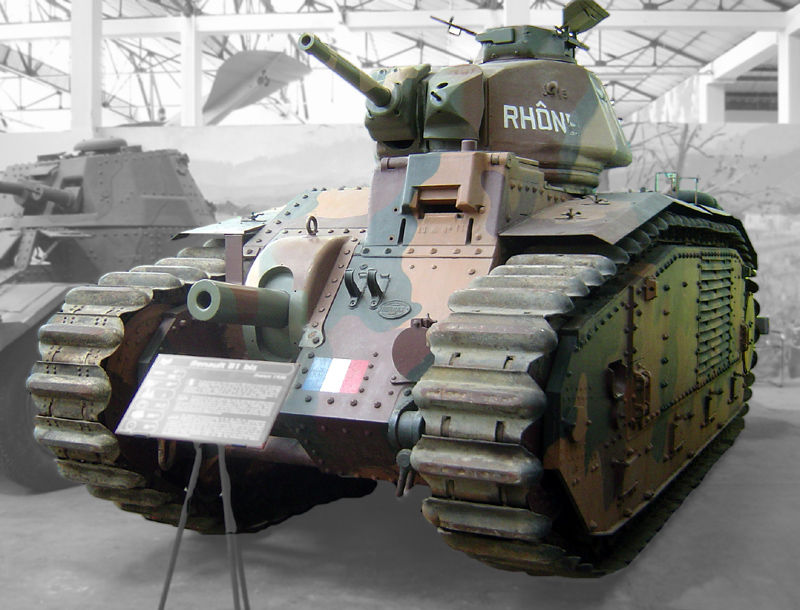
Historcial and Walkaround Photos
German Sd.Kfz. 232 (8 Rad)
The Sd.Kfz. 232 (8-Rad) was a German heavy armored reconnaissance vehicle developed during the 1930s to provide long-range scouting capabilities for rapidly moving armored formations. Equipped with eight-wheel drive and excellent cross-country mobility, the vehicle could operate far ahead of advancing forces while maintaining radio contact through its distinctive frame antenna. Armed with a 20mm cannon and machine gun, the Sd.Kfz. 232 was capable of engaging light enemy vehicles while gathering intelligence. It served extensively during the early campaigns of World War II and helped establish Germany's reputation for effective reconnaissance operations.


German military doctrine emphasized speed, mobility, and battlefield intelligence, creating a requirement for a modern armored reconnaissance vehicle. Büssing-NAG developed the eight-wheeled chassis to provide superior mobility compared to earlier six-wheeled designs. Introduced in 1937, the Sd.Kfz. 232 incorporated advanced radio equipment, allowing commanders to receive timely battlefield information from forward units. Continuous improvements to suspension, armor protection, and communications equipment enhanced its effectiveness. The vehicle's success influenced later German reconnaissance designs and demonstrated the value of highly mobile armored scout vehicles in modern warfare.


