Interwar
1919-1931
World War I
Soviet T-18 (MS-1)
The T-18, also known as the MS-1, was the Soviet Union's first domestically produced tank and entered service in 1928. Inspired by the French Renault FT but incorporating several indigenous improvements, it marked the beginning of the Soviet armored industry.
Although lightly armed and armored, the T-18 provided valuable experience in tank production, crew training, and tactical employment. It served as the foundation upon which the Soviet Union would build one of the world's largest armored forces.
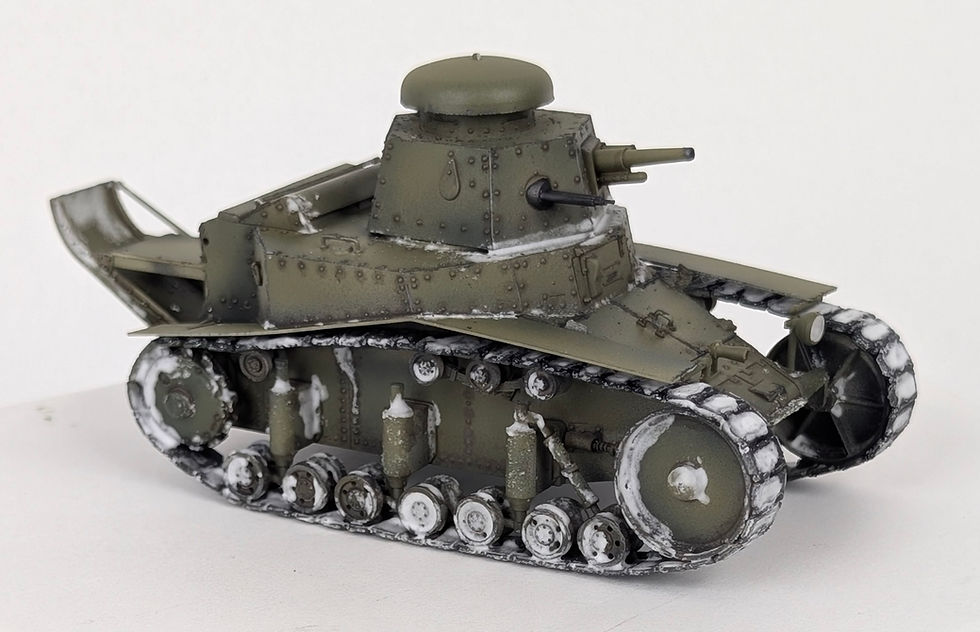


Following the Russian Civil War, Soviet military leaders recognized the importance of mechanized warfare but possessed little industrial experience in tank production. Engineers studied captured and foreign vehicles, particularly the Renault FT, while adapting the design to domestic manufacturing capabilities.
The T-18 featured a rotating turret, improved suspension, and a more powerful engine than many earlier designs. Production began in 1928, giving Soviet factories and crews practical experience in constructing and operating armored vehicles.
Although quickly surpassed by more advanced tanks, the T-18 fulfilled its primary objective by establishing a national tank industry and preparing the Soviet Union for rapid armored expansion during the 1930s.

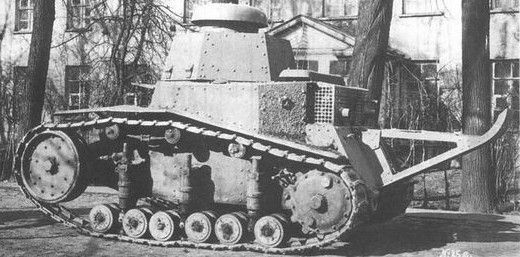

Historcial and Walkaround Photos
German Leichttraktor Rheinmetall
Overview
The Leichttraktor Rheinmetall was an experimental German light tank developed around 1930 despite the restrictions imposed by the Treaty of Versailles. Although only a small number of prototypes were built, the project played a critical role in preserving German armored engineering during a period when tank development was officially prohibited.
The vehicle never entered mass production but provided valuable testing data that contributed to later German tank designs and the emergence of the Panzer force.


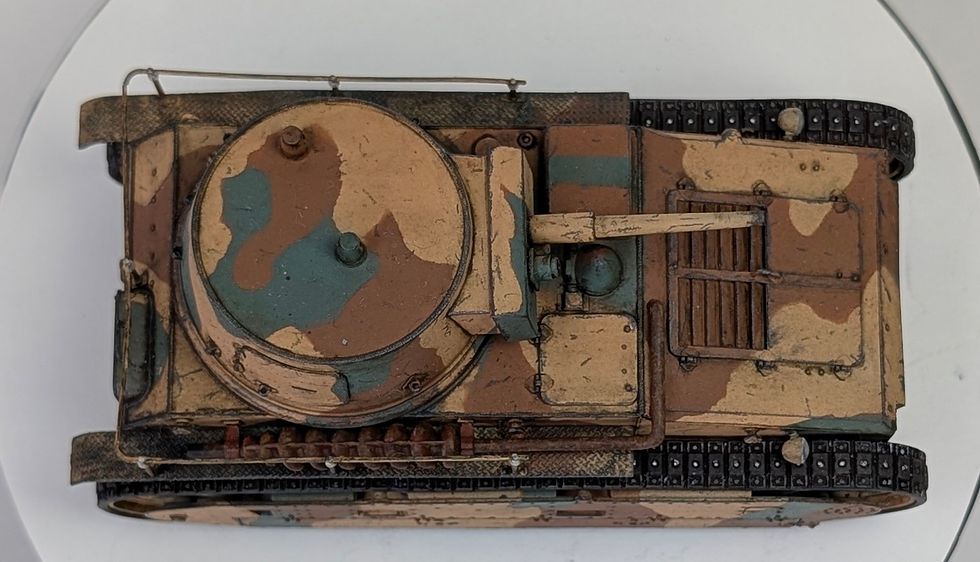
After World War I, the Treaty of Versailles prohibited Germany from developing tanks. Nevertheless, German engineers continued armored research through secret programs and experimental prototypes.
The Leichttraktor was developed to test new suspension systems, engines, transmissions, and turret arrangements rather than to serve as an operational combat vehicle. Several prototypes were constructed by Rheinmetall and evaluated under controlled conditions, including testing in cooperation with the Soviet Union.
The knowledge gained from these experiments helped German designers refine concepts of mobility, crew efficiency, and mechanical reliability. Although the Leichttraktor itself was unsuccessful as a fighting vehicle, it became an important stepping stone toward the Panzer tanks that would appear only a few years later.


Historcial and Walkaround Photos
Soviet T-26 Light Tank Mod. 1931
The T-26 Mod. 1931 became one of the most important tanks of the early 1930s and one of the most widely produced tanks of its era. Based on the British Vickers 6-Ton design, it was adapted and manufactured in large numbers by the Soviet Union.
Designed primarily for infantry support, the T-26 combined simplicity, reliability, and ease of production. It served extensively during the 1930s and remained in frontline service during the opening stages of World War II.


Seeking a modern and practical tank for mass production, the Soviet Union purchased examples of the British Vickers 6-Ton and incorporated many of its features into a domestic design. The resulting T-26 entered production in 1931.
Early models featured twin machine-gun turrets before later variants adopted a single turret with a 45 mm gun. The tank's straightforward construction allowed thousands to be built while helping Soviet industry develop large-scale armored manufacturing capabilities.
The T-26 demonstrated the Soviet emphasis on quantity, standardization, and mechanization. Although eventually outclassed by newer designs, it formed the backbone of Soviet armored forces throughout much of the 1930s and played a crucial role in the evolution of Soviet tank doctrine.


Historcial and Walkaround Photos
British Vickers Mark I Medium
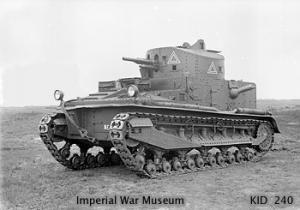
The Vickers Medium Tank Mk. I, introduced in 1923, was one of the world's first tanks designed specifically for peacetime military requirements rather than wartime necessity. It combined improved speed, reliability, and crew comfort with a fully rotating turret, making it a significant step toward the modern tank.
Serving as Britain's principal medium tank during much of the 1920s, it provided valuable experience in mechanized warfare and influenced armored doctrine both in Britain and abroad. Although lightly armored by later standards, it helped bridge the gap between the slow rhomboid tanks of World War I and the fast maneuver warfare vehicles of the 1930s.


British engineers recognized that World War I tanks were too slow and mechanically unreliable for future warfare. Vickers sought to design a more versatile vehicle capable of supporting infantry while also exploiting breakthroughs with greater mobility.
The resulting Medium Mk. I incorporated a rotating turret, improved suspension, better engine performance, and enhanced visibility for the crew. Wireless radio equipment was also introduced on some vehicles, improving battlefield command and control.
While never intended for large-scale combat against modern opponents, the tank became an important experimental platform for developing British armored doctrine. Many concepts tested on the Medium Mk. I influenced later cruiser and infantry tanks used during World War II.


Historcial and Walkaround Photos
French Char 2C
The Char 2C was the largest operational tank ever placed into military service and represented the final evolution of French heavy tank design from World War I. Conceived to break through heavily fortified enemy defenses, it combined thick armor, a 75 mm main gun, and a crew of twelve, making it more like a mobile fortress than a conventional tank. Although completed after the war in 1921, only ten vehicles were built.
Despite its impressive size and firepower, the Char 2C was expensive, slow, and difficult to transport and maintain. Rapid advances in tank technology during the 1920s soon made the giant vehicle obsolete. Nevertheless, it remained a symbol of French industrial capability and armored strength throughout the interwar years.


Development of the Char 2C began during the final years of World War I when French planners sought a breakthrough tank capable of crushing trenches and fortified positions. Lessons learned from earlier Schneider and Saint-Chamond tanks encouraged designers to create a vehicle with greater protection, better mobility, and a fully rotating turret.
The war ended before production could begin, reducing the military need for such a massive machine. However, ten tanks were completed and entered service in 1921. Their enormous dimensions required special railway transport and complicated maintenance, limiting their practical usefulness.
Although the Char 2C never saw combat during its intended era, it demonstrated both the possibilities and limitations of extremely heavy tank design. Future nations would instead favor smaller, faster, and more mechanically reliable vehicles.


