World War II
1942 vol 2
World War I
German Panzer IV G


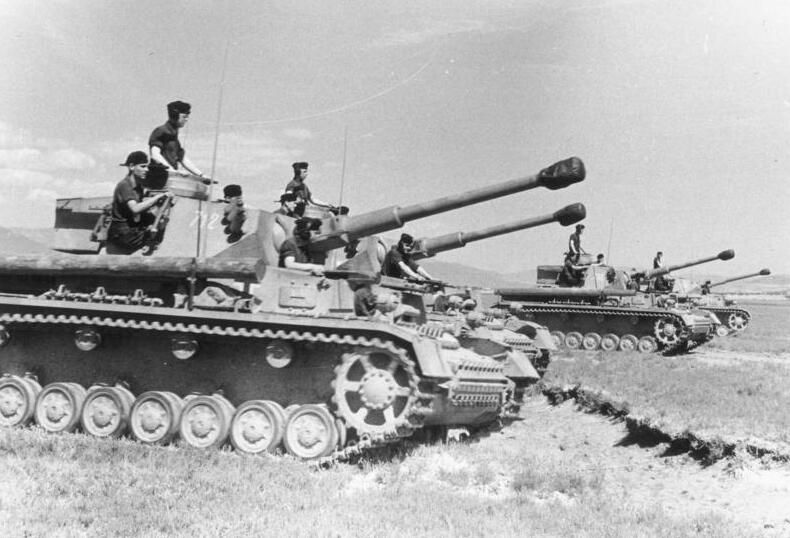
Historcial and Walkaround Photos
German Panzer III J L/60
The Panzer III Ausf. J armed with the 5 cm KwK 39 L/60 gun represented the most capable gun-equipped version of Germany's principal medium tank before the introduction of later variants. The longer, high-velocity cannon greatly improved the tank's ability to engage Soviet T-34s and other well-armored opponents, while its reliable chassis and balanced design made it a mainstay of German armored divisions during 1942. Although eventually overshadowed by the Panzer IV, the Ausf. J remained an effective battlefield vehicle throughout the middle years of the war.


Combat experience during Operation Barbarossa demonstrated that the earlier 50 mm L/42 gun lacked sufficient penetration against modern Soviet armor. In response, German engineers equipped later Ausf. J production vehicles with the more powerful 5 cm KwK 39 L/60 cannon while retaining the improved 50 mm frontal armor introduced on the model. These upgrades significantly enhanced the Panzer III's combat effectiveness, but the limited size of the turret prevented installation of larger weapons. As a result, the Panzer III gradually transitioned from Germany's primary battle tank to specialized support roles as newer designs entered service.


Historcial and Walkaround Photos
German Panzer I F
The Panzer I Ausf. F was a heavily armored assault version of Germany's first production tank. Unlike the lightly armored Panzer I used during the early campaigns of the war, the Ausf. F emphasized protection over speed, featuring armor up to 80 mm thick while retaining twin machine guns as its primary armament. Produced in very limited numbers, it served mainly in security and anti-partisan operations on the Eastern Front.


The Ausf. F was developed to evaluate the concept of a heavily protected infantry support vehicle capable of surviving intense enemy fire. Engineers substantially redesigned the original Panzer I by incorporating much thicker armor, a strengthened suspension, and wider tracks to compensate for the increased weight. While the vehicle offered exceptional protection for its size, its machine-gun armament severely limited its combat effectiveness against armored vehicles and fortified positions. Only a small production run was completed before the concept was abandoned.

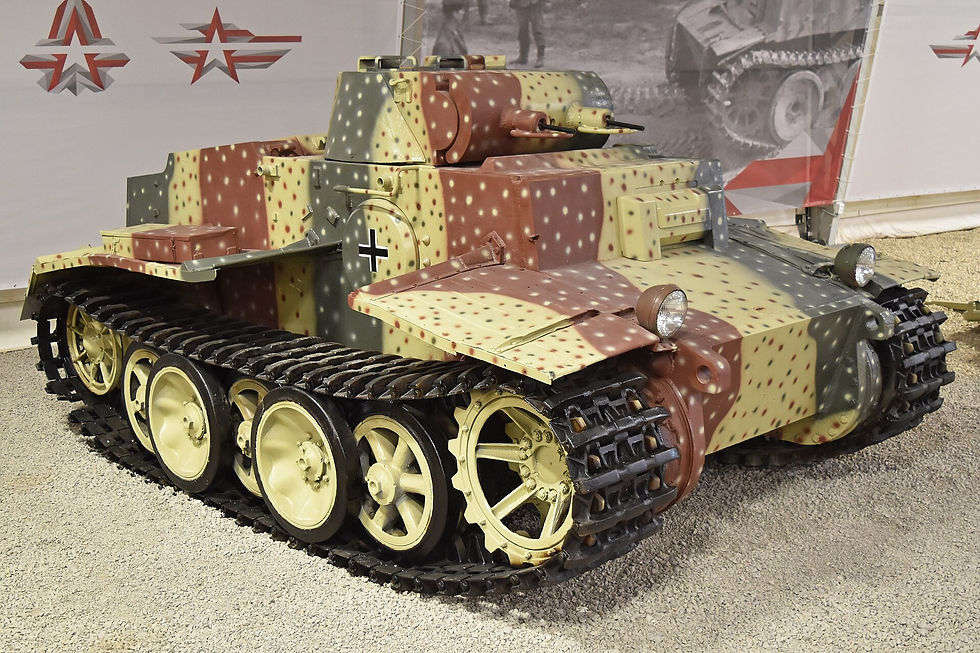

Historcial and Walkaround Photos
German Panzer IV F2
The Panzer IV Ausf. F2 marked a turning point in the evolution of Germany's principal medium tank. Replacing the earlier short-barreled 75 mm gun with the high-velocity 7.5 cm KwK 40 L/43 cannon, it became one of the first German tanks capable of effectively engaging the Soviet T-34 and KV-1 at normal combat ranges. The F2 restored Germany's qualitative advantage in armored firepower during 1942 and served on every major front of the war.


Combat on the Eastern Front demonstrated that the short-barreled Panzer IV was no longer adequate against modern Soviet armor. German engineers responded by fitting the vehicle with the newly developed KwK 40 L/43 gun while making only minor structural modifications to the existing chassis. The resulting increase in armor penetration transformed the Panzer IV from an infantry support tank into Germany's primary battle tank. The success of the F2 established the configuration that would continue through the later G, H, and J variants.


Historcial and Walkaround Photos
British A22 Churchill III
The Churchill Mk. III represented a major improvement in Britain's heavy infantry tank, introducing a welded turret armed with the more powerful 6-pounder anti-tank gun. Retaining the Churchill's exceptional climbing ability and thick armor, the Mk. III proved particularly effective during the North African campaign, the invasion of Sicily, and the Italian campaign. Its ability to traverse difficult terrain made it one of the most versatile Allied infantry tanks of the war.


Early combat experience demonstrated that the Churchill required greater firepower to counter increasingly capable German armored vehicles. The Mk. III replaced the earlier cast turret with a welded design housing the high-velocity 6-pounder gun, significantly improving anti-tank performance while maintaining the vehicle's excellent protection and cross-country mobility. The Churchill chassis continued to evolve throughout the war, serving as the basis for numerous specialized engineer, bridge-laying, and armored recovery vehicles that played critical roles in Allied operations.


Historcial and Walkaround Photos
British Sherman II
The Sherman II was the British designation for the American M4A1 Sherman medium tank. Featuring a distinctive fully cast hull, it combined excellent mechanical reliability, a fully rotating 75 mm gun, and good cross-country mobility. Entering service in North Africa during 1942, the Sherman II quickly became one of the most important Allied tanks, serving with British and Commonwealth forces throughout Europe, Italy, and Northwest Europe until the end of the war.

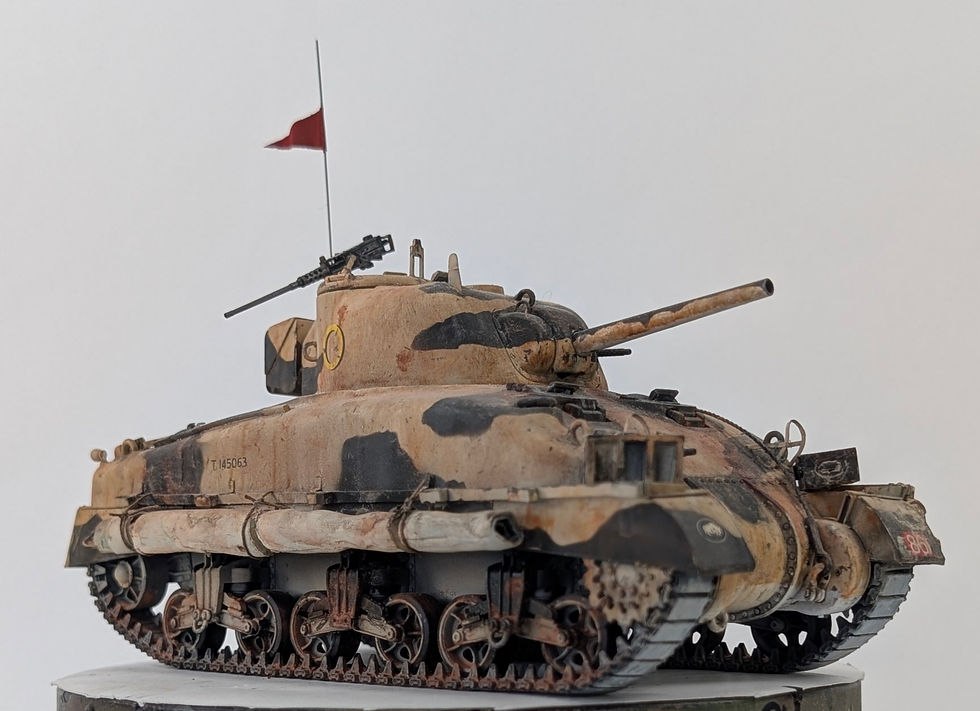

The M4A1 was developed to replace interim American medium tanks with a more balanced and versatile design. Its cast hull simplified manufacturing while providing rounded surfaces that improved ballistic protection. British crews designated the vehicle Sherman II and employed it extensively in both armored and infantry support roles. Continuous wartime improvements included enhanced suspension, upgraded armament, and additional armor, allowing the Sherman family to remain effective throughout the conflict.
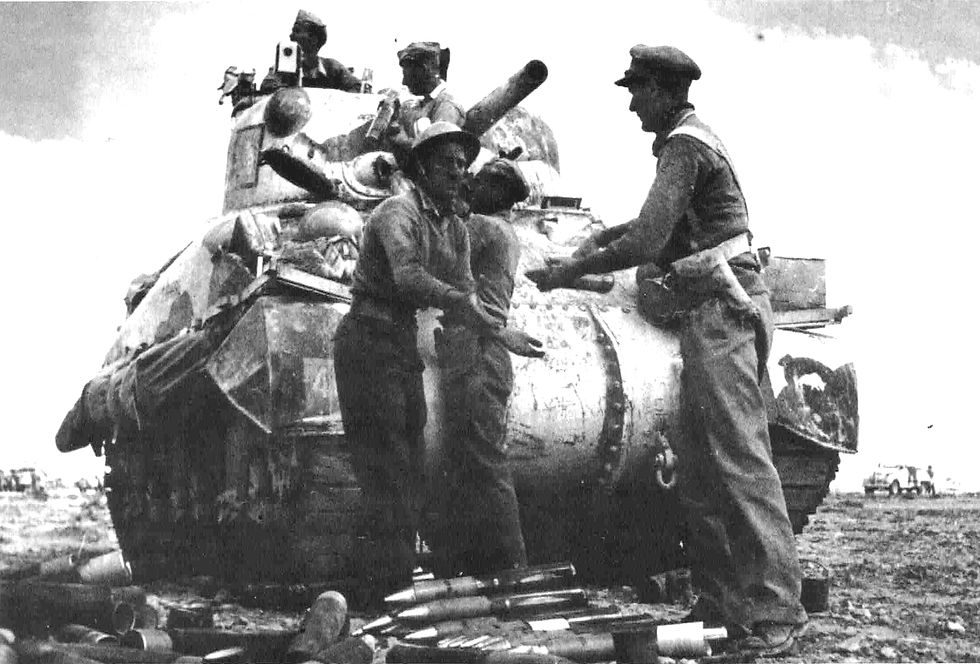

Historcial and Walkaround Photos
American Stuart M3A1
The Stuart M3A1 was an improved version of the American M3 light tank, incorporating numerous refinements that enhanced crew efficiency and combat effectiveness. Armed with a 37 mm gun and powered by a reliable radial engine, it combined high speed with excellent mechanical dependability. The M3A1 served extensively with American, British, Commonwealth, Soviet, and Chinese forces, performing reconnaissance, screening, and infantry support missions throughout the war.


The M3A1 was developed to address shortcomings identified in the original Stuart design. Engineers introduced a redesigned turret without external machine-gun sponsons, improved internal crew layout, and a powered turret traverse that increased combat efficiency. These refinements simplified production while enhancing battlefield performance. Although the 37 mm gun became increasingly ineffective against newer enemy tanks, the Stuart's speed and reliability ensured its continued service in reconnaissance roles until the end of the war.


Historcial and Walkaround Photos
American Sherman M4
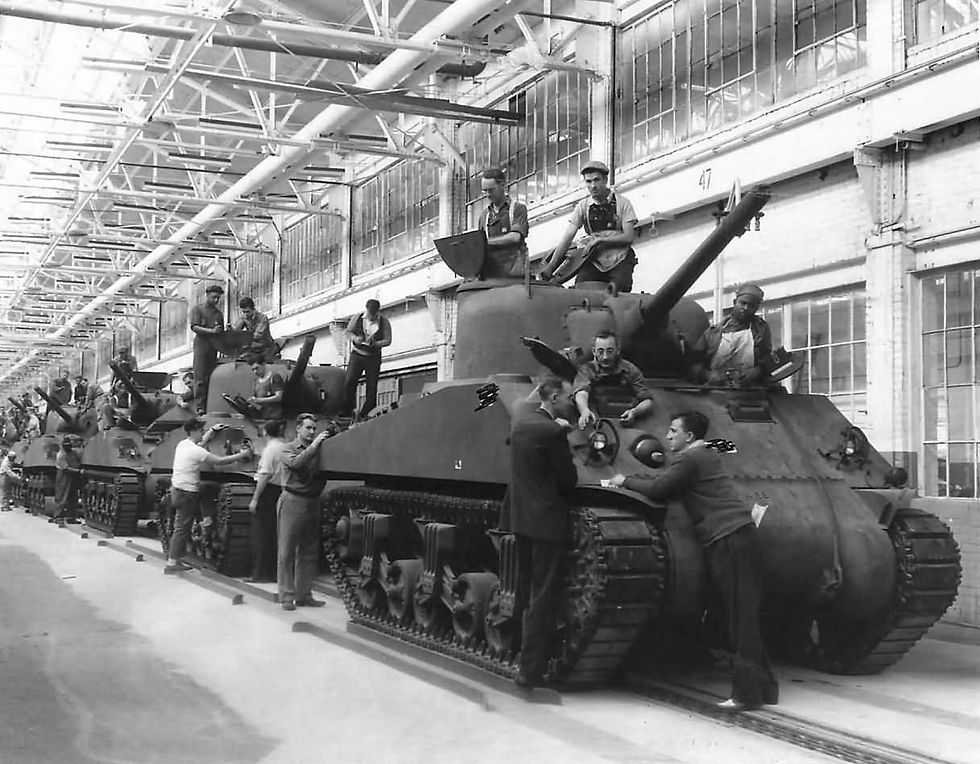
The M4 Sherman was the principal medium tank of the United States and the most widely used Allied tank of the Second World War. Combining mechanical reliability, good mobility, and a fully rotating 75 mm gun, it proved adaptable to a wide variety of combat roles across Europe, North Africa, and the Pacific. Produced in enormous numbers, the Sherman served with American, British, Commonwealth, Free French, Soviet, and numerous other Allied forces, becoming one of the defining armored vehicles of the conflict.


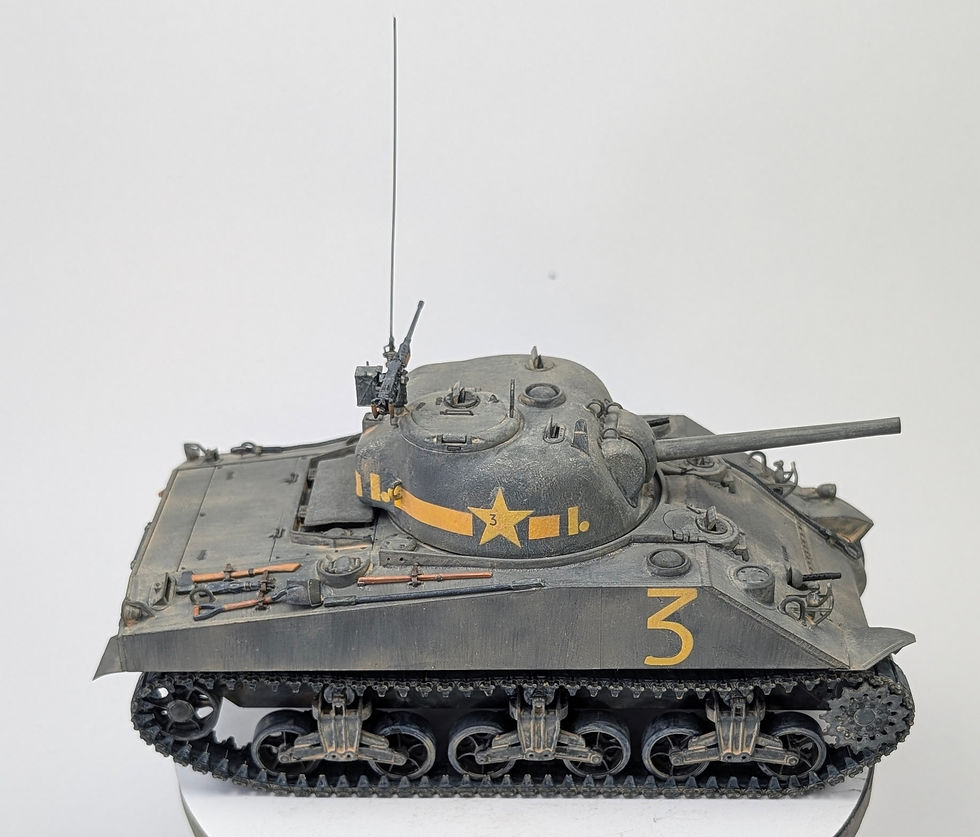
The M4 Sherman was developed from lessons learned with the M3 medium tank, incorporating a fully rotating turret mounting the 75 mm gun while retaining many proven automotive components. Designed for rapid mass production and ease of maintenance, the Sherman was continuously improved throughout the war with enhanced armor, suspension, engines, and armament. Its versatility allowed the chassis to serve as the basis for numerous specialized vehicles, including tank destroyers, recovery vehicles, engineer tanks, and self-propelled artillery, ensuring its continued use long after the war ended.


Historcial and Walkaround Photos
German Marder II D
The Marder II D was a tank destroyer based on the Panzer II Ausf. D/E fast chassis, mounting the powerful 7.5 cm PaK 40 anti-tank gun in an open-topped fighting compartment. Combining excellent mobility with substantial firepower, it provided German armored units with an effective weapon against Allied and Soviet tanks during the middle years of the war. Although lightly armored, it served successfully until more heavily protected tank destroyers became available.


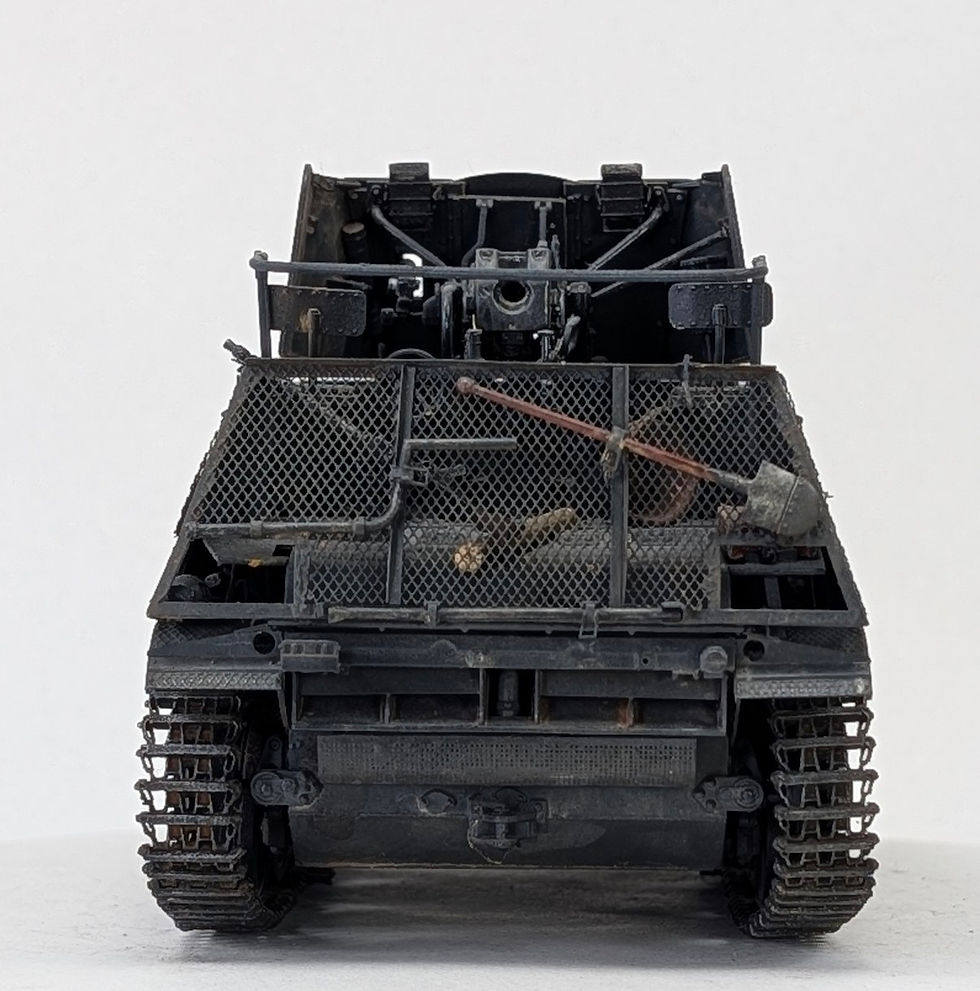
As German forces encountered increasingly capable enemy armor, obsolete Panzer II chassis were converted into mobile anti-tank vehicles rather than withdrawn from service. The Ausf. D and E suspension provided high road speeds, making them suitable platforms for the installation of the 7.5 cm PaK 40. The resulting vehicle retained the typical Marder characteristics of exceptional firepower combined with limited crew protection. Operational experience gained from the Marder II contributed directly to the development of later German tank destroyers with fully enclosed fighting compartments.


Historcial and Walkaround Photos
German Marder III H
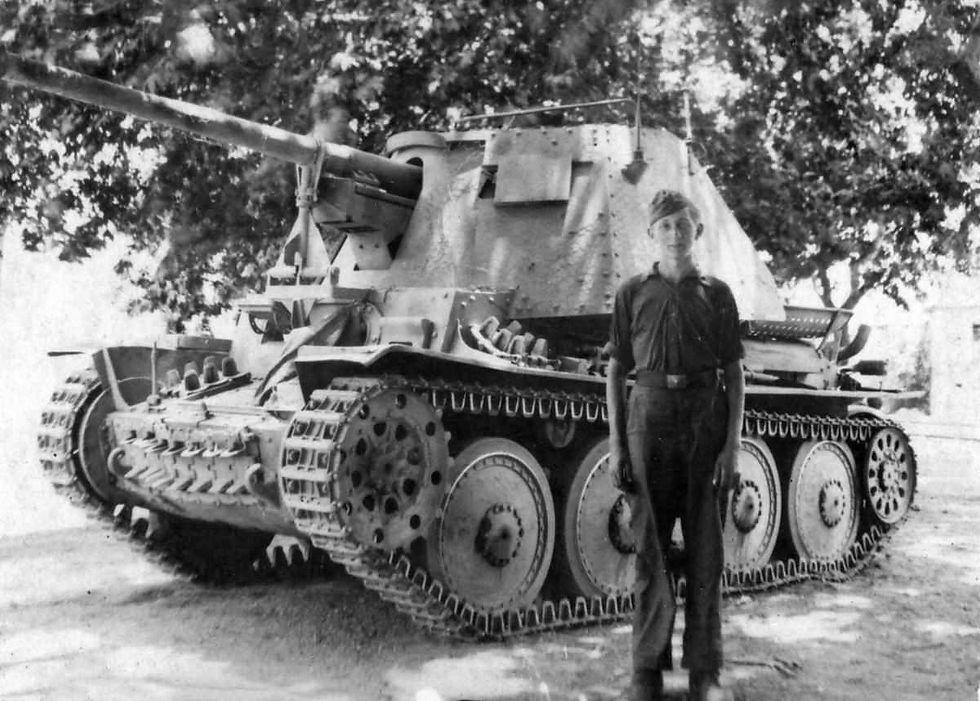
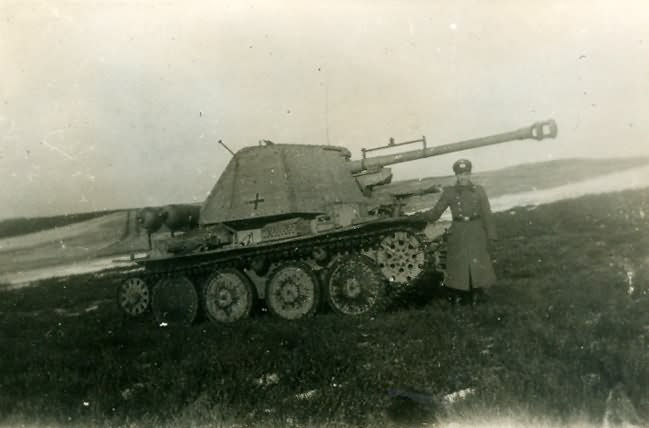
The Marder III Ausf. H was one of the most effective German self-propelled anti-tank vehicles built on the reliable Panzer 38(t) chassis. Armed with the powerful 7.5 cm PaK 40 anti-tank gun mounted in an open-topped fighting compartment, it provided German forces with a highly mobile weapon capable of defeating virtually all Allied tanks encountered during 1943 and 1944. Its dependable mechanical performance made it a valuable asset on both the Eastern and Western Fronts.
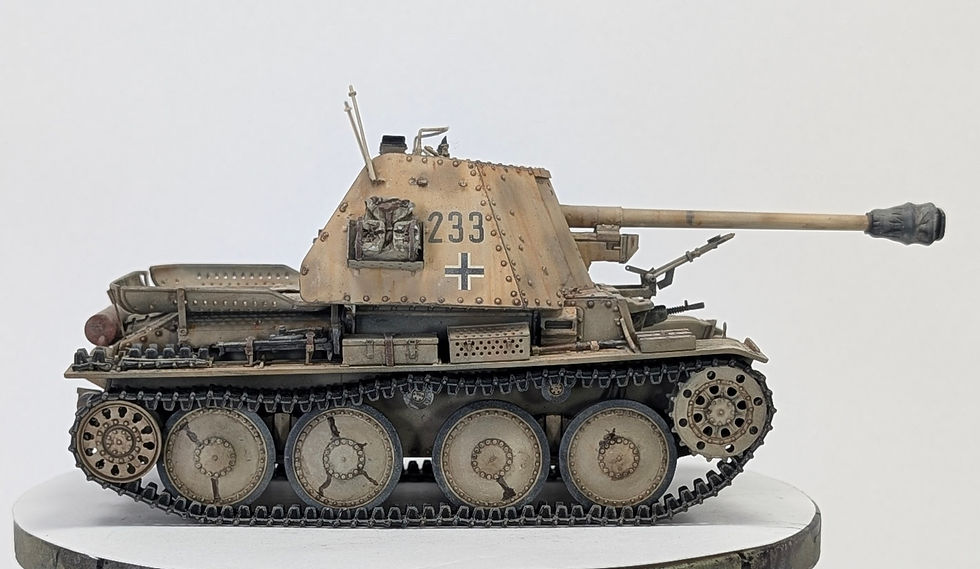


The Ausf. H represented an improved version of the Marder III family, relocating the fighting compartment toward the center of the vehicle to improve crew balance and ammunition storage. The proven Czech chassis provided excellent reliability while supporting the weight of the powerful PaK 40 gun. Although the open superstructure left the crew vulnerable to artillery fragments and small-arms fire, the combination of mobility, firepower, and ease of production made the Marder III Ausf. H one of Germany's most successful interim tank destroyers until the arrival of the Jagdpanzer 38 "Hetzer."

Historcial and Walkaround Photos
German StuG III F/8
The StuG III Ausf. F/8 was an important transitional version of Germany's highly successful Sturmgeschütz III assault gun. Built on the improved Panzer III Ausf. J/L chassis, it combined thicker frontal armor with the long-barreled 7.5 cm StuK 40 L/48 gun, giving it excellent anti-tank capability while retaining its effectiveness in supporting infantry. Entering service in late 1942, the F/8 proved highly effective on the Eastern Front and laid the foundation for the even more numerous Ausf. G.


The Ausf. F/8 was developed in response to the increasing threat posed by Soviet medium and heavy tanks. Engineers incorporated the strengthened hull of the Panzer III Ausf. J/L while retaining the proven casemate design of earlier StuG variants. Additional armor protection and the powerful L/48 gun significantly improved both survivability and firepower. Combat experience with the F/8 directly influenced the design of the StuG III Ausf. G, which became Germany's most-produced armored fighting vehicle.


Historcial and Walkaround Photos
German Panzer I C
The Panzer I Ausf. C was a specialized high-speed reconnaissance tank that differed substantially from earlier Panzer I variants. Designed with modern torsion-bar suspension, sloped armor, and a powerful engine, it emphasized mobility and reconnaissance rather than infantry support. Armed with a rapid-firing 7.92 mm EW 141 semi-automatic anti-tank rifle, the Ausf. C was produced in limited numbers and saw combat on both the Eastern Front and in Western Europe.


The Ausf. C was developed as an entirely new vehicle sharing little more than its name with the original Panzer I. German engineers sought to create a fast reconnaissance vehicle capable of surviving modern battlefields through improved mobility and modest armor protection. Although its advanced suspension and high speed represented significant technical improvements, the light armament limited its usefulness against increasingly well-armored enemy vehicles. Production remained small, and the design was not developed further.

