Interwar
1938
World War I
German Panzer 38(t) E/F
The Panzer 38(t) Ausf. E and F were improved versions of the highly reliable Czech-designed light tank that formed an important part of Germany’s armored forces during the early years of World War II. Armed with a 37 mm KwK 38(t) gun and two machine guns, the Ausf. E/F retained the excellent mobility and mechanical dependability that had made earlier models successful in Poland and France. Increased armor protection distinguished these variants, making them better suited for combat against increasingly capable Allied tanks. Panzer 38(t) E and F tanks served extensively during Operation Barbarossa and remained valued for their reliability, although the limitations of their light armament became apparent against newer Soviet designs.


Following combat experience in Poland and France, German engineers sought to improve the protection of the Panzer 38(t) without sacrificing its renowned reliability. Introduced in late 1940, the Ausf. E incorporated additional bolted armor plates that increased frontal armor thickness to 50 mm and side armor to 30 mm. The closely related Ausf. F continued these improvements with minor manufacturing refinements and revised internal equipment. While the enhanced armor improved crew survivability, the tank retained the same 37 mm main gun, which proved increasingly inadequate against Soviet T-34 and KV-1 tanks encountered in 1941. Although the Panzer 38(t) eventually became obsolete as a frontline tank, its exceptionally dependable chassis served as the basis for numerous successful vehicles, including the Marder III tank destroyer, Grille self-propelled gun, and the Jagdpanzer 38(t) Hetzer.


Historcial and Walkaround Photos
German Panzer IV B
The Panzer IV Ausf. B was an early production version of Germany's principal support tank and represented an important step in the evolution of one of the most significant armored vehicles of World War II. Armed with a short-barreled 75mm gun, the tank was designed to engage anti-tank guns, infantry positions, and fortified defenses. The Panzer IV complemented the Panzer III within German armored doctrine and provided valuable fire support during the early campaigns of the war.


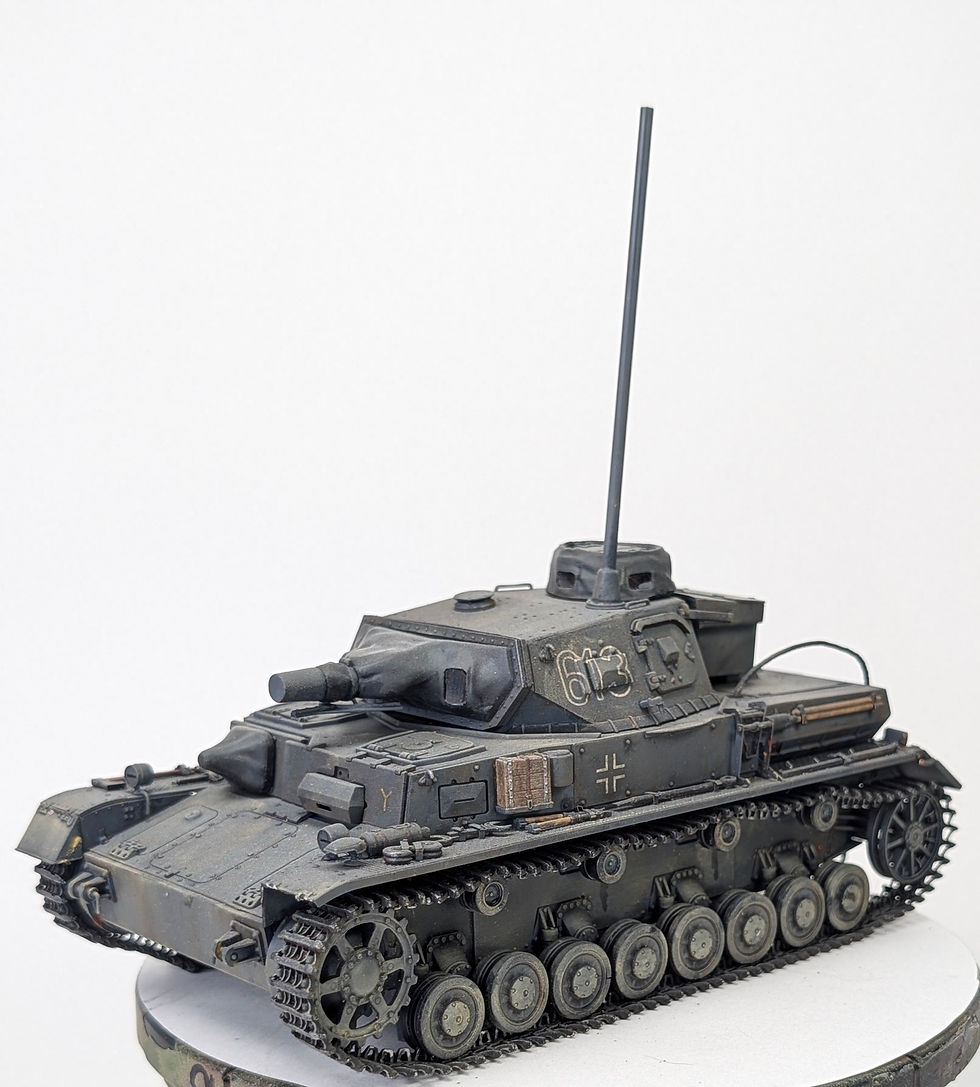
Building on the experience gained from the Ausf. A, the Ausf. B introduced improvements to armor protection, engine performance, and internal layout. Produced beginning in 1938, the vehicle featured a more powerful Maybach engine and revised frontal armor design. Although manufactured in relatively small numbers, the Ausf. B served as a transitional model that helped refine the Panzer IV design. Continued development would eventually transform the vehicle from an infantry support tank into Germany's primary medium tank.

Historcial and Walkaround Photos
Japanese Type 97 Te-Ke
The Type 97 Te-Ke was a Japanese light tank developed to replace the earlier Type 94 tankette and provide reconnaissance and infantry support capabilities. Compact, reliable, and relatively mobile, the Te-Ke was armed with a 37mm gun that offered improved firepower over its predecessor. The vehicle served extensively throughout the Pacific War, particularly in reconnaissance, security, and support roles where its small size and mobility were advantageous.

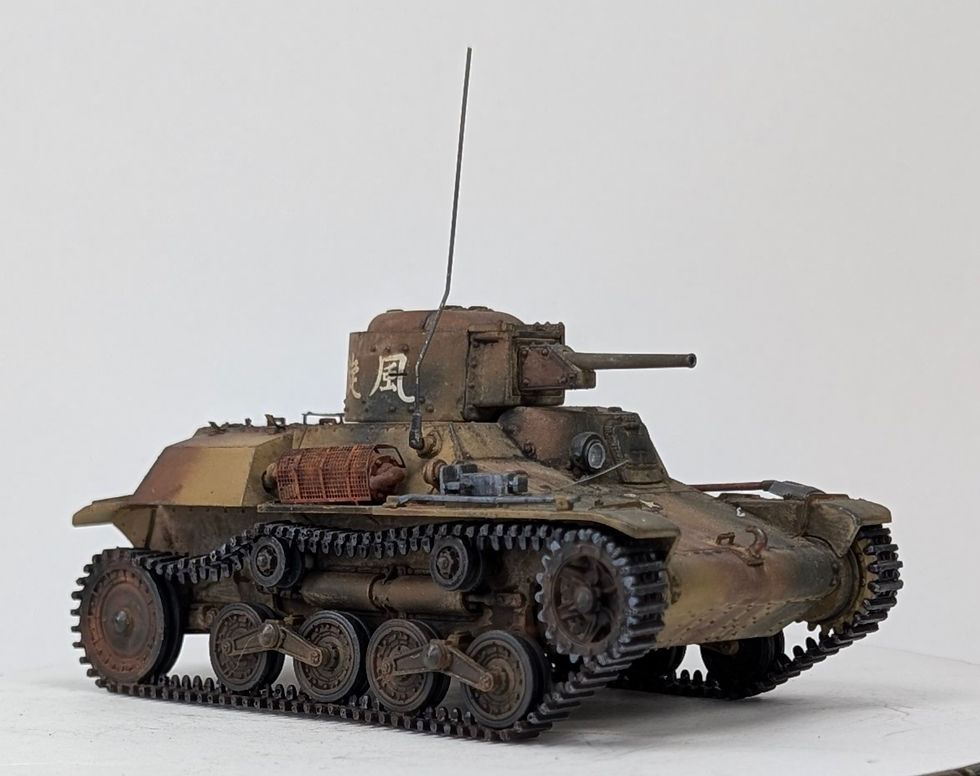

Japanese engineers sought to improve upon the limitations of the Type 94 by creating a vehicle with better crew arrangements, increased firepower, and improved performance. Introduced in 1938, the Type 97 Te-Ke featured a rear-mounted engine and a fully rotating turret armed with a 37mm cannon. Although lightly armored, the tank was simple to manufacture and maintain. Its design reflected Japan's emphasis on mobility and operational flexibility in the varied terrain of Asia and the Pacific.


Historcial and Walkaround Photos
Japanese Type 97 Chi-Ha
The Type 97 Chi-Ha was Japan's most widely produced medium tank and formed the backbone of the Imperial Japanese Army's armored forces during World War II. Designed for infantry support and mobile operations, it combined reasonable mobility with a low-profile design and a 57mm gun optimized for high-explosive fire. The Chi-Ha saw combat across China, Southeast Asia, and the Pacific, becoming one of the most recognizable Japanese tanks of the war.


Development of the Chi-Ha began in the mid-1930s as Japan sought a modern medium tank capable of supporting infantry and conducting mobile warfare. Entering service in 1938, the design emphasized reliability, ease of production, and adaptability to operations across diverse terrain. Combat experience, particularly against Soviet armored forces, highlighted the need for greater anti-tank capability, leading to the improved Shinhoto Chi-Ha with a more powerful 47mm gun. The Chi-Ha's long service life and extensive production made it the most important Japanese tank of the Second World War.


Historcial and Walkaround Photos
British A9 Cruiser
The A9 Cruiser was one of Britain's first true cruiser tanks and reflected the growing emphasis on mobility within British armored doctrine during the 1930s. Designed to exploit breakthroughs and conduct rapid operations behind enemy lines, the tank combined relatively high speed with light armor protection. Armed with a 2-pounder anti-tank gun and supplemented by machine-gun turrets, the A9 represented a significant advancement over earlier British tank designs and served in both France and North Africa.

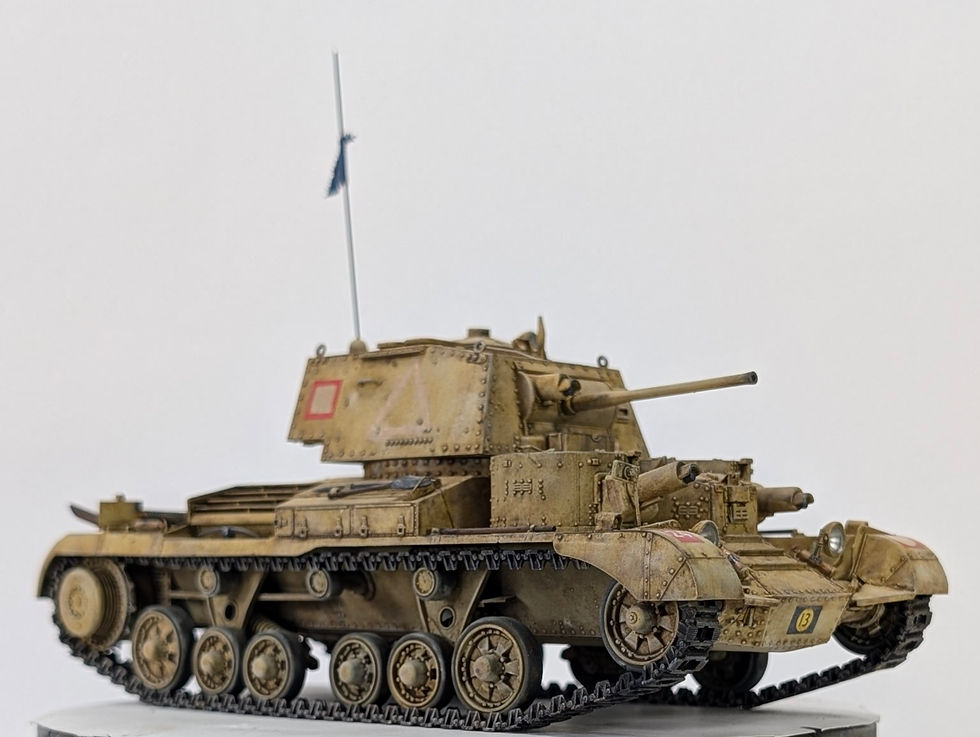

Developed under the direction of Sir John Carden, the A9 emerged from British studies into fast, maneuverable armored vehicles. The design featured a powerful engine and Christie-inspired suspension concepts that emphasized mobility over protection. Entering service in 1937, the tank reflected British efforts to separate infantry tanks from cruiser tanks, each with distinct battlefield roles. Operational experience highlighted the limitations of its thin armor, but the A9 provided valuable lessons that influenced subsequent British cruiser tank development.


Historcial and Walkaround Photos
British A10 Cruiser CS
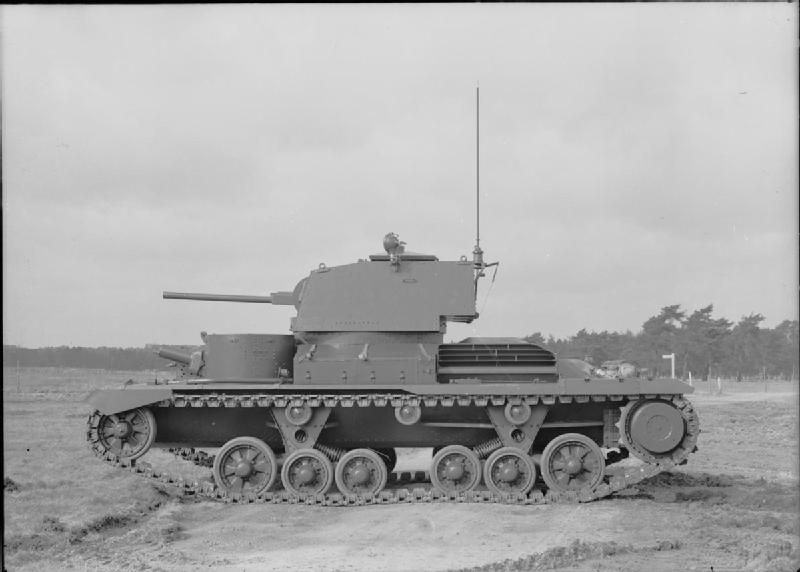
The A10 Cruiser Close Support (CS) was a British cruiser tank variant designed to provide smoke and high-explosive fire support to armored formations. Armed with a 3.7-inch howitzer instead of the standard anti-tank gun, the vehicle was intended to assist advancing tanks by suppressing enemy positions and creating smoke screens. Although slower and more heavily armored than earlier cruiser tanks, the A10 CS filled an important tactical role during the early years of World War II, particularly in France and North Africa.


The A10 evolved from the earlier A9 Cruiser tank as British doctrine called for improved armor protection and specialized support vehicles. Designers increased armor thickness while retaining many components of the original cruiser design. The Close Support version replaced the main gun with a howitzer capable of firing smoke and high-explosive rounds. Entering service in the late 1930s, the A10 CS reflected British efforts to balance mobility, protection, and battlefield support capabilities before more advanced cruiser tanks became available.


Historcial and Walkaround Photos
British A13 Cruiser Mk. I
The A13 Cruiser Mk.I represented a major advancement in British cruiser tank design by incorporating the Christie suspension system, which significantly improved speed and cross-country mobility. Armed with the standard 2-pounder anti-tank gun, the tank was intended to conduct rapid maneuver operations and exploit breakthroughs created by infantry and artillery. The A13's mobility made it one of the fastest tanks of its era and laid the foundation for later British cruiser tank developments.


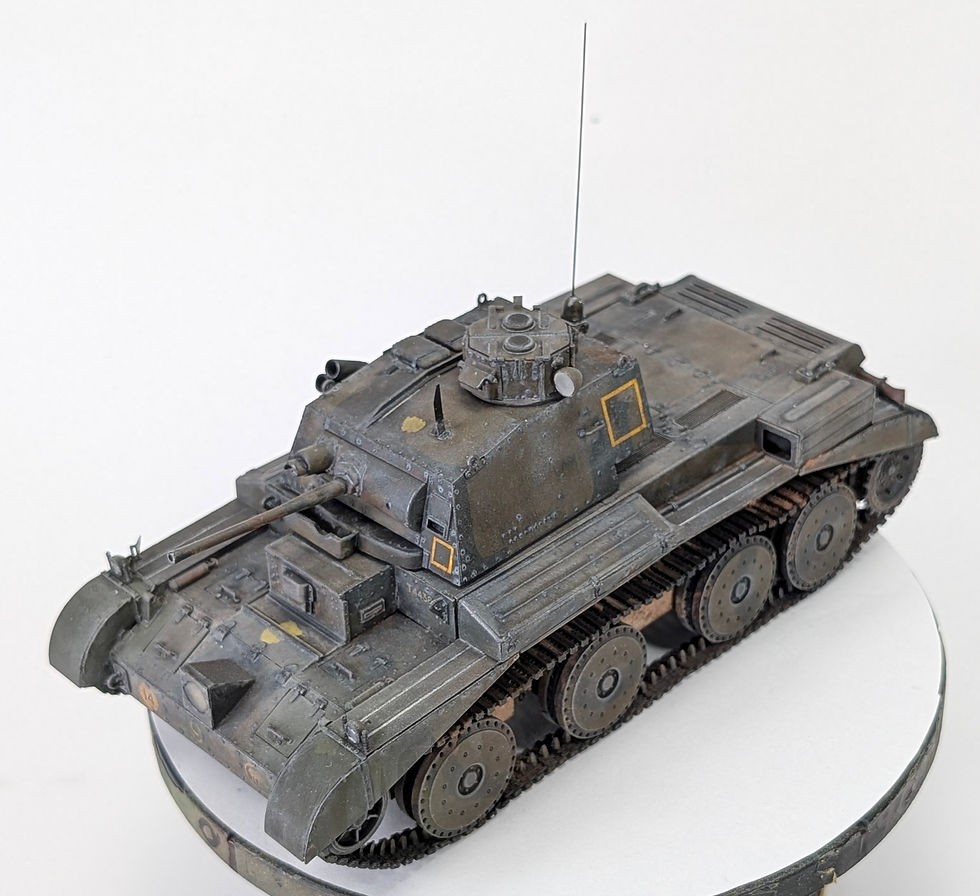
British interest in the Christie suspension led to the acquisition and study of American Christie designs during the 1930s. The resulting A13 incorporated many of these principles while adapting them to British requirements. Entering production in 1938, the vehicle featured improved suspension, increased speed, and better operational flexibility compared to earlier cruiser tanks. Although armor protection remained relatively light, the A13's mobility demonstrated the advantages of Christie suspension and influenced a generation of British armored vehicles.


Historcial and Walkaround Photos
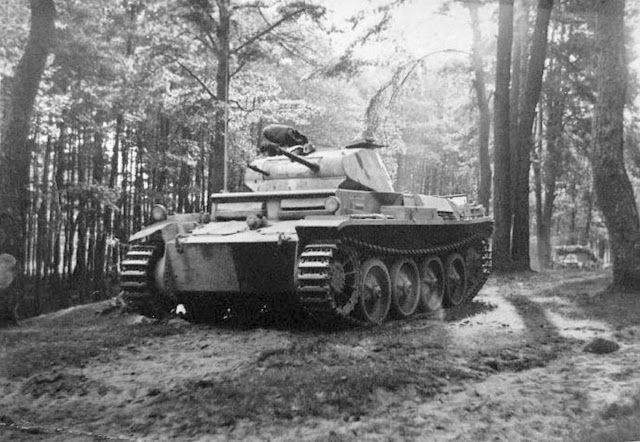
German Panzer II D1
The Panzer II Ausf. D was a high-speed variant of Germany's light tank designed to improve mobility for reconnaissance and fast-moving armored formations. While retaining the standard 20mm cannon and machine gun armament of earlier Panzer II models, the Ausf. D featured a completely redesigned suspension system intended to increase road speed. Although the vehicle achieved impressive performance on roads, its cross-country capability proved inferior to previous variants. As a result, many Panzer II D tanks were later converted into self-propelled gun and tank destroyer platforms, extending their usefulness throughout the war.


Introduced in 1938, the Ausf. D was developed as part of Germany's effort to create a faster reconnaissance tank. Engineers replaced the traditional bogie suspension with a torsion-bar-inspired arrangement using large road wheels and four-wheel leaf-spring units. While this improved road speed, it reduced off-road performance and reliability. Production remained limited, and the design was soon abandoned in favor of more capable reconnaissance vehicles. Many surviving chassis were converted into the Marder II tank destroyer and other specialized vehicles, demonstrating the adaptability of the design.