Interwar
1933-1934
World War I
Soviet T-28
The T-28 was a Soviet medium tank introduced in 1933 and designed to support infantry during breakthrough operations. Featuring a large main turret armed with a 76.2 mm gun and two forward machine-gun turrets, it combined substantial firepower with greater mobility than heavier multi-turret tanks.
The T-28 served extensively during the 1930s and participated in conflicts such as the Winter War against Finland and the opening stages of World War II. Although eventually surpassed by newer designs like the T-34, it represented a significant step in the evolution of Soviet armored forces.

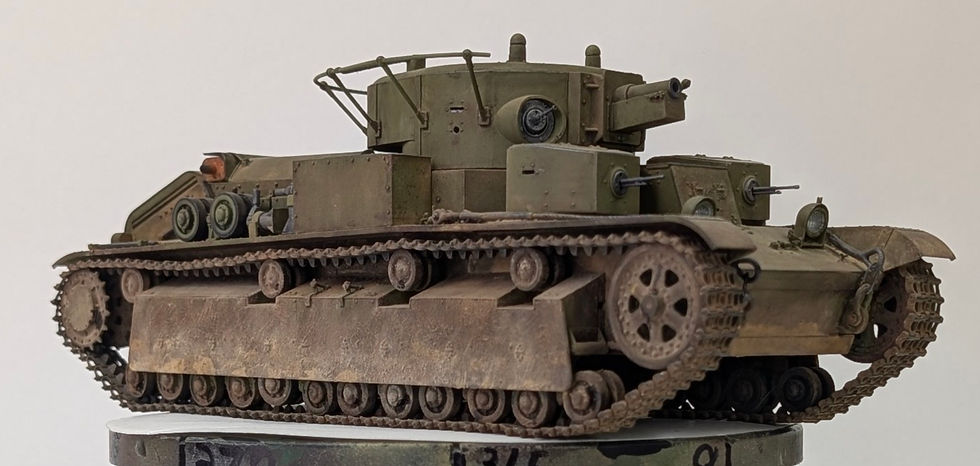

Soviet interest in breakthrough tanks led engineers to study foreign concepts, including British experimental designs. The resulting T-28 balanced heavy firepower with improved mobility, making it more practical than larger multi-turret vehicles.
Its suspension and engine provided reasonable speed for its era, while the main gun offered effective support against fortifications and enemy positions. Experience during combat prompted additional armor upgrades to improve survivability.
Although mechanically demanding and expensive to produce, the T-28 helped Soviet designers refine concepts of crew organization, firepower, and battlefield tactics. Lessons learned from its service contributed to the development of more advanced tanks that would dominate later stages of the war.


Historcial and Walkaround Photos
Soviet T-35
The T-35 was a Soviet heavy tank introduced in 1933 and remains one of history's most recognizable multi-turreted armored vehicles. Equipped with five turrets carrying a combination of cannon and machine guns, it was designed to overwhelm enemy defenses through sheer firepower. At the time of its introduction, it was among the largest and most heavily armed tanks in the world.
While visually impressive, the T-35 suffered from mechanical complexity and limited reliability. Its enormous size made it difficult to maneuver and maintain, and many were lost due to breakdowns rather than enemy action. Nevertheless, it symbolized Soviet industrial ambition and the doctrine of overwhelming battlefield firepower.


During the late 1920s and early 1930s, Soviet military planners explored the concept of the "land battleship"—a heavily armed tank capable of supporting infantry and breaking through fortified defenses. Influenced by foreign multi-turret experiments, Soviet engineers developed the T-35 to maximize firepower in all directions.
The vehicle combined a large central turret mounting a 76.2 mm gun with four smaller turrets carrying additional weapons. Although this arrangement appeared formidable on paper, coordinating multiple crews and maintaining such a complex machine proved extremely difficult.
Production began in limited numbers, but operational experience revealed serious mechanical shortcomings. Advances in anti-tank weapons and improvements in single-turret designs soon rendered the multi-turret concept obsolete. Despite its flaws, the T-35 remains an important milestone in Soviet armored development.


Historcial and Walkaround Photos
German Panzer I A
The Panzer I Ausf. A was Germany's first mass-produced tank and entered service in 1934. Although lightly armored and armed with only two machine guns, it played a crucial role in rebuilding Germany's armored forces after the restrictions imposed by the Treaty of Versailles. More importantly, it provided valuable experience in crew training, maintenance, and the development of armored tactics.
The Panzer I participated in the Spanish Civil War and the early campaigns of World War II, including Poland and France. While never intended to fight heavily armed enemy tanks, it served as the foundation upon which Germany built its highly effective Panzer divisions.


During the early 1930s, Germany secretly developed armored vehicles under the guise of agricultural equipment and training machines. The Panzer I was designed primarily as a training tank, allowing crews and commanders to gain practical experience while industry expanded its manufacturing capabilities.
Its simple construction featured a small two-man crew, a rotating turret armed with twin machine guns, and a lightweight chassis that emphasized mobility over protection. Although limited in combat capability, the vehicle proved mechanically reliable and relatively easy to produce.
Experience gained with the Panzer I helped German engineers refine suspension systems, crew organization, and armored doctrine. These lessons directly influenced the development of the Panzer II, III, and IV, making the Panzer I one of the most historically significant tanks despite its modest battlefield performance.


Historcial and Walkaround Photos
Japanese Type 89B Otsu
The Type 89B Otsu was a Japanese medium tank introduced in the early 1930s and represented one of the world's first production tanks powered by a diesel engine. Designed primarily for infantry support, it combined improved reliability, better fuel economy, and reasonable cross-country mobility with a low-velocity 57 mm gun intended to engage fortifications and machine-gun positions.
The Type 89B became the backbone of Japan's armored forces during the 1930s and participated in operations throughout China. Although later outclassed by more modern tanks, it played a significant role in establishing Japanese armored doctrine and mechanized operations.


Following experience with earlier imported and domestically produced tanks, the Imperial Japanese Army sought a more reliable vehicle capable of supporting infantry in the varied terrain of East Asia. Engineers refined the existing Type 89 design by replacing its gasoline engine with a diesel powerplant, reducing fire hazards while improving operational range and fuel efficiency.
The redesigned Type 89B incorporated suspension improvements and mechanical refinements that enhanced reliability under harsh field conditions. Its 57 mm gun was optimized for infantry support rather than tank-versus-tank combat, reflecting Japanese tactical doctrine of the period.
The success of the Type 89B demonstrated the advantages of diesel-powered armored vehicles and provided valuable experience for later Japanese tank development. It served as an important bridge between Japan's early experimental tanks and the more advanced vehicles of World War II.


Historcial and Walkaround Photos
Polish TKS-nKm wz. 38 FK
The TKS-MG15 was a Polish tankette introduced in 1934 as an improved version of the earlier TK series. Small, fast, and inexpensive, it was designed for reconnaissance, communications, and infantry support rather than direct combat against enemy tanks. Operated by a crew of two, the TKS featured improved armor, a more reliable engine, and better visibility than its predecessor.
By the outbreak of World War II, the TKS formed the backbone of Poland's armored reconnaissance units. Although most vehicles were armed only with a machine gun, a small number received a powerful 20 mm autocannon that proved capable of destroying several German armored vehicles during the 1939 campaign. Despite being outmatched by larger tanks, the TKS demonstrated the skill and determination of its crews.

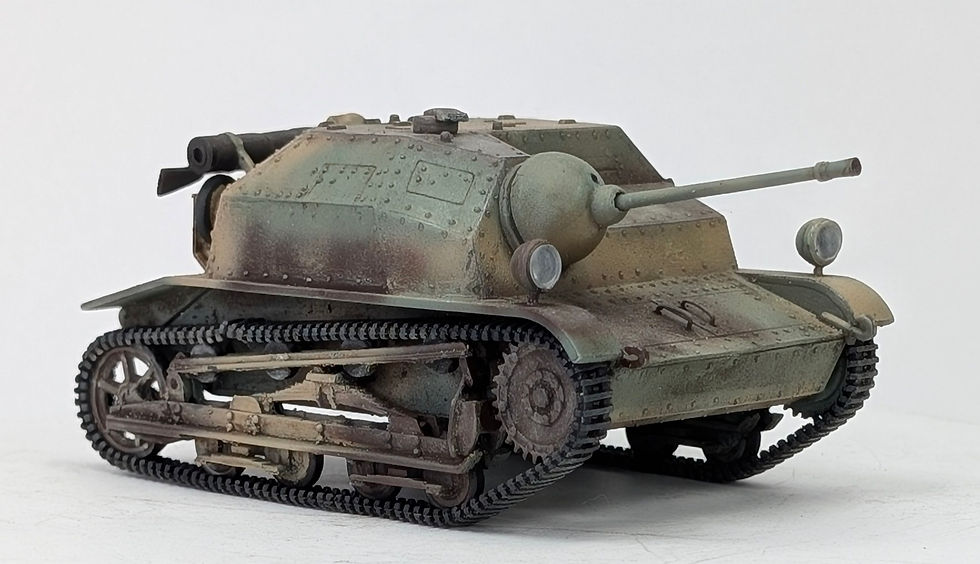

Polish engineers sought to improve upon the British Carden-Loyd tankette concept, which had inspired the earlier TK-3. The result was the TKS, featuring redesigned armor plates, improved suspension components, and a more powerful engine that enhanced both mobility and reliability.
The vehicle's compact size made it easy to conceal and well suited for reconnaissance missions across Poland's varied terrain. However, its limited internal space restricted the size of its armament, and most examples carried only a single machine gun.
Recognizing this weakness, engineers later equipped some vehicles with a 20 mm FK-A autocannon, greatly increasing their combat effectiveness. Although the TKS could not alter the outcome of the 1939 invasion, it remains one of the most successful and recognizable tankettes ever produced.


Historcial and Walkaround Photos
Soviet T-37
The T-37 was the Soviet Union's first mass-produced amphibious tank and entered service in 1933. Designed primarily for reconnaissance and support missions, it could travel on both land and water, giving Soviet forces a unique capability for crossing rivers and marshes without engineering support. Armed with a single machine gun and protected by light armor, the T-37 was never intended to fight enemy tanks but instead to gather intelligence and support advancing infantry.
Although lightly armed and vulnerable to enemy fire, the T-37 represented an important step in Soviet mechanized warfare. Thousands were produced, and the experience gained from its development contributed directly to later amphibious designs such as the T-38 and T-40.
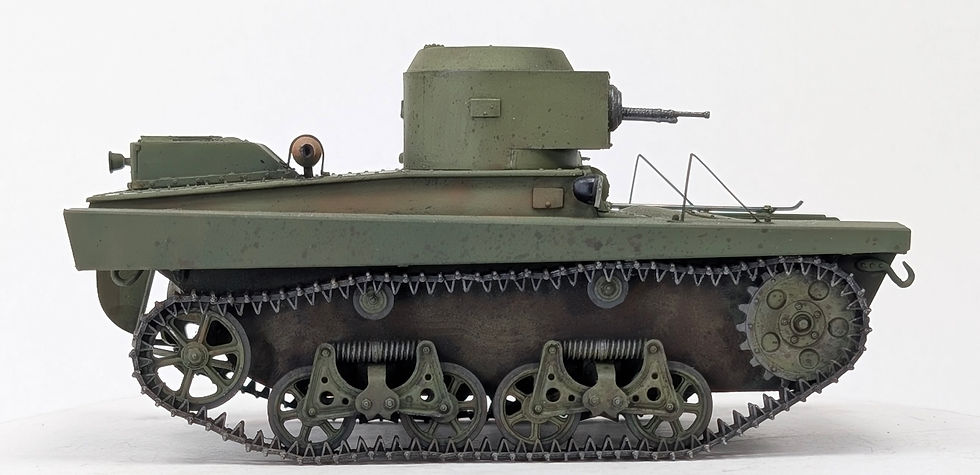
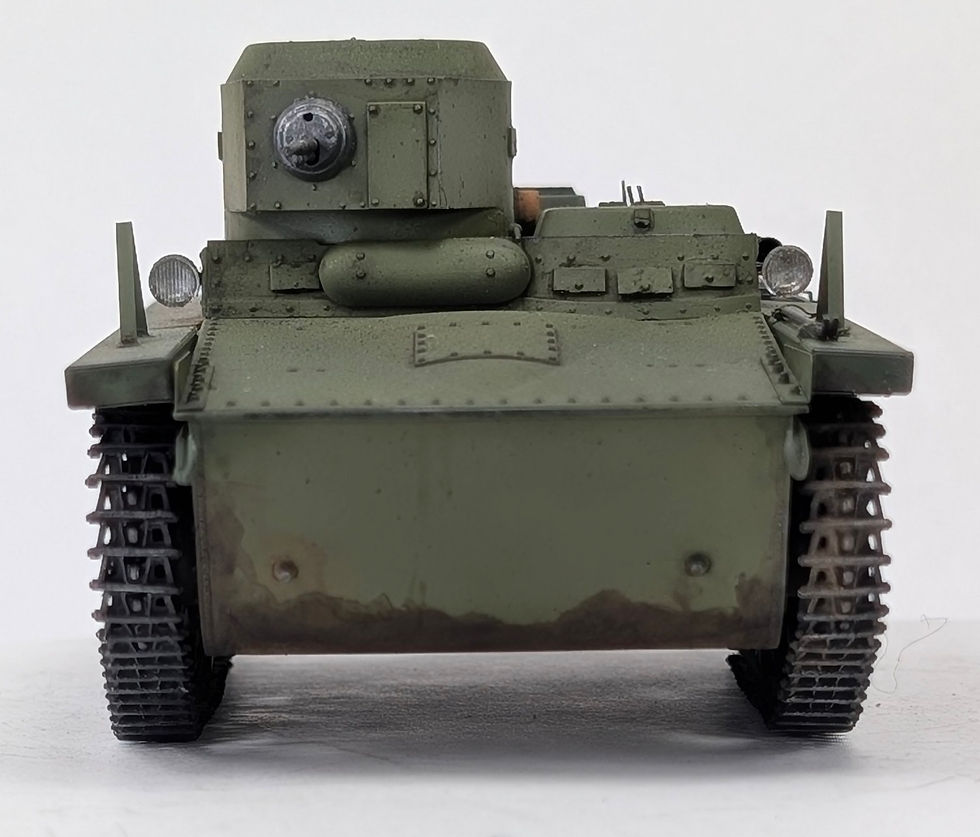

During the early 1930s, Soviet military planners sought a lightweight reconnaissance vehicle capable of operating across the country's vast network of rivers and wetlands. Engineers examined foreign amphibious tank concepts, particularly the British Vickers-Carden-Loyd designs, and adapted them to Soviet requirements.
The resulting T-37 featured a watertight hull, propeller-driven water propulsion, and a simple suspension system that made mass production possible. Its compact size allowed easy transportation and relatively low manufacturing costs, although the thin armor offered little protection against anything heavier than small-arms fire.
Despite its limitations, the T-37 successfully demonstrated the practicality of amphibious armored vehicles and became an important experimental platform for future Soviet reconnaissance tanks.


Historcial and Walkaround Photos
Italian CV3/33
The CV3/33, also known as the L3/33, was an Italian tankette introduced in 1933 and designed to provide a fast, inexpensive armored vehicle for reconnaissance and infantry support. Operated by a crew of two and armed with machine guns, it emphasized mobility and simplicity rather than firepower or protection.
The CV3/33 became one of Italy's most widely produced armored vehicles and served in Ethiopia, Spain, North Africa, and the early campaigns of World War II. While effective against lightly armed opponents, its thin armor and limited weaponry quickly made it obsolete against modern tanks and anti-tank weapons.


Italian military doctrine during the interwar period favored large numbers of small, highly mobile armored vehicles. Inspired by the British Carden-Loyd tankette, Italian engineers developed the CV3/33 as a compact and economical design that could be produced quickly and operated by a minimal crew.
The vehicle featured a small armored hull, tracked suspension, and twin machine guns for close infantry support. Its light weight allowed excellent mobility over difficult terrain, but the absence of a cannon severely limited its combat effectiveness against armored opponents.
Although later upgraded in several variants, the CV3/33 demonstrated the shortcomings of the tankette concept. Combat experience showed that future armored vehicles required heavier armament and improved protection, influencing the development of more capable Italian tanks.


Historcial and Walkaround Photos
German Flak 18
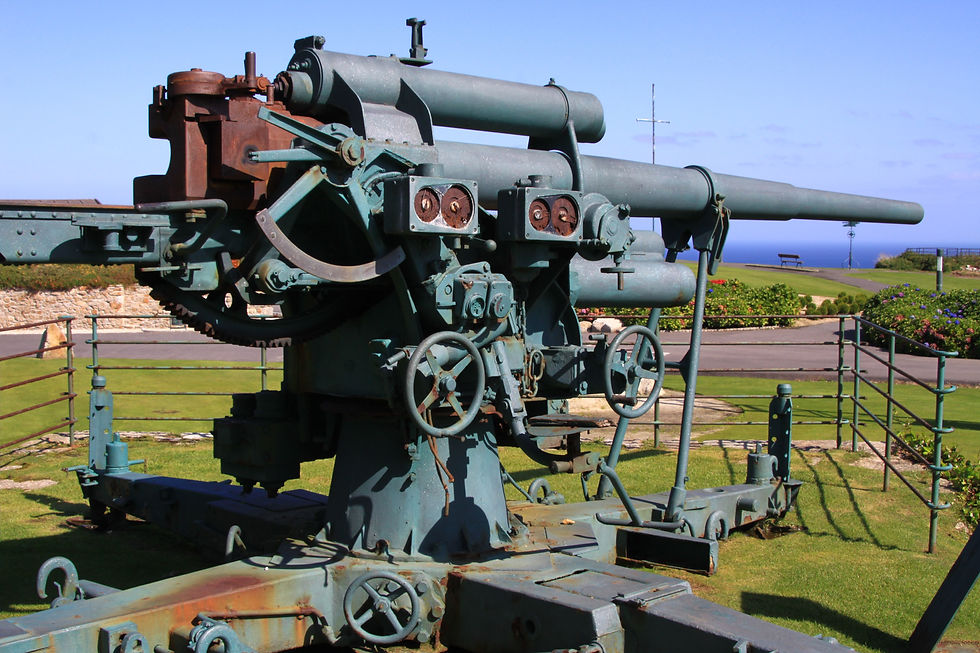
The 8.8 cm Flak 18 was originally developed by Germany as a heavy anti-aircraft gun but quickly proved to be one of the most versatile artillery weapons of the twentieth century. Introduced in the early 1930s, it could engage aircraft at high altitude while also delivering devastating fire against ground targets. Its exceptional muzzle velocity allowed it to penetrate armor that was beyond the capability of most contemporary anti-tank guns.
During World War II, the Flak 18 earned a legendary reputation as an anti-tank weapon, particularly during campaigns in France and North Africa. Mounted on a mobile carriage and capable of rapid deployment, it became one of Germany's most feared battlefield weapons. The success of the 88 mm gun would later influence the armament of famous tanks such as the Tiger I.


Following the restrictions imposed after World War I, Germany sought to modernize its artillery while concealing aspects of its military development. Engineers at Krupp designed a heavy anti-aircraft gun capable of engaging increasingly fast and high-flying aircraft. The result was the Flak 18, featuring a long barrel, high muzzle velocity, and a cruciform mounting that allowed 360-degree traverse.
Although intended primarily for air defense, testing demonstrated that its powerful armor-piercing ammunition could destroy even heavily armored vehicles at long range. German commanders soon recognized its potential as an anti-tank weapon, leading to its widespread use in multiple battlefield roles.
The Flak 18 established the foundation for later improvements such as the Flak 36 and Flak 37. Its combination of firepower, accuracy, and versatility made it one of the most influential artillery pieces of the Second World War.